For some strange reason the humorous and funny blog post I had crafted in my mind died before it was born. Instead I am left with the reflection that came to me years ago when I read a novel by C.S Lewis, the author of The Chronicles of Narnia among other great works. But before I get to his book I want you to imagine something.
Imagine Time is an illusion. Imagine, if you can, that the past, present and future all happen at once. You can assign whatever reality you want to this concept, be it God, the Divine or the delusions of your dear author. But to whatever entity you imagine Time to be, imagine this entity is a silver circle, with no beginning and no end, merely flowing infinitely from itself and from itself; never-ending, never-ceasing, never-starting. We shall call this circle Eternity (This in and of itself is another difficult concept, what is Eternity? But let us leave that for another day, let us not chase too many rabbits down too many holes at once).

Now imagine a straight line, reaching from somewhere and stretching to somewhere and in your mind that line touches that circle at one point and one point only. In Mathematics, we would call that point a Tangent and it would be the only point in the entire universe that the circle touches the line. But in our example where the circle is Eternity, that line is no longer just a tangent, but the Present. There and only there should life be lived. There and only there should the focus of our desires and our passions and our joys be concentrated, there and only there does regret have no power and fear no strength.
Years ago, an Australian man gave this example to me and I would like to boast that I understood what he meant as we sat by the fire in middle of winter in Bulawayo. My mind grappled to see what all this nonsense about circles and lines meant. He could see it in my eyes and I remember he smiled at me and said, 'simply put, Bongani, it means Live in the present moment'. I smiled with joy; now that was concrete enough for me, an instruction that could be made sense of and lived to but as often with these things, it is easier said than done, even more so when the logic behind was fuzzy to my teenage mind.
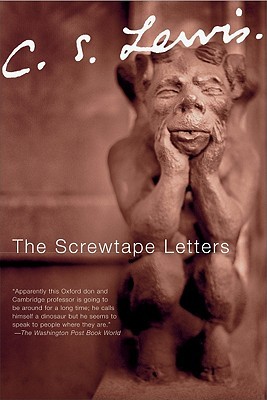
And then this is where we return to C.S Lewis. In his book, The ScrewTape Letters whose 'author' is a Senior Demon in Hell and is in the form of Letters to his nephew Wormwood who is on earth trying to capture a human soul; ScrewTape writes the following advice:
The humans live in time but our Enemy destines them to eternity. He therefore, I believe, wants them to attend chiefly to two things, to eternity itself, and to that point of time which they call the Present. For the Present is the point at which time touches eternity. Of the present moment, and of it only, humans have an experience analogous to the experience which our Enemy has of reality as a whole; in it alone freedom and actuality are offered them. He would therefore have them continually concerned either with eternity (which means being concerned with Him) or with the Present — either meditating on their eternal union with, or separation from, Himself, or else obeying the present voice of conscience, bearing the present cross, receiving the present grace, giving thanks for the present pleasure.
Our business is to get them away from the eternal, and from the Present. With this in view, we sometimes tempt a human (say a widow or a scholar) to live in the Past. But this is of limited value, for they have some real knowledge of the past and it has a determinate nature and, to that extent, resembles eternity. It is far better to make them live in the Future. Biological necessity makes all their passions point in that direction already, so that thought about the Future inflames hope and fear. Also, it is unknown to them, so that in making them think about it we make them think of unrealities. In a word, the Future is, of all things, the thing least like eternity. It is the most completely temporal part of time — for the Past is frozen and no longer flows, and the Present is all lit up with eternal rays.
...to be sure, the Enemy wants men to think of the Future too — just so much as is necessary for now planning the acts of justice or charity which will probably be their duty tomorrow. The duty of planning the morrow’s word is today’s duty; though its material is borrowed from the future, the duty, like all duties, is in the Present. This is now straw splitting. He does not want men to give the Future their hearts, to place their treasure in it. We do. His ideal is a man who, having worked all day for the good of posterity (if that is his vocation), washes his mind of the whole subject, commits the issue to Heaven, and returns at once to the patience or gratitude demanded by the moment that is passing over him. But we want a man hag-ridden by the Future — haunted by visions of an imminent heaven or hell upon earth — ready to break the Enemy’s commands in the present if by so doing we make him think he can attain the one or avert the other — dependent for his faith on the success or failure of schemes whose end he will not live to see. We want a whole race perpetually in pursuit of the rainbow’s end, never honest, nor kind, nor happy now, but always using as mere fuel wherewith to heap the altar of the future every real gift which is offered them in the Present.
I remember reading that passage so many years ago and suddenly the story about a Circle and a Line came into clear focus and made perfect sense. Epiphany is a word one should rarely ever use but that moment seemed to clear the dullness from around me as I truly realized what my Australian friend had meant all those years ago. A life given to the past is lost in the regret that captures its heart. A life longing to the future is lost in the imaginations and fears of a Time that has not, and might not, ever arrive. And for so many of us that is how we live; captured by the points of the Circle that our lives are no longer in contact with or longing for the ones yet to come, and forgetting the one part that is Real: The Present moment.
I wish I could say I knew how to fully live in the Present Moment; that I had figured out the secret of the Universe and the mysteries of Life and Joy. But alas, your author is still plodding his way along trying to figure it all out. One thing I do know is how not to live: in the Future or in the Past.
Imagine Time is an illusion. Imagine, if you can, that the past, present and future all happen at once. You can assign whatever reality you want to this concept, be it God, the Divine or the delusions of your dear author. But to whatever entity you imagine Time to be, imagine this entity is a silver circle, with no beginning and no end, merely flowing infinitely from itself and from itself; never-ending, never-ceasing, never-starting. We shall call this circle Eternity (This in and of itself is another difficult concept, what is Eternity? But let us leave that for another day, let us not chase too many rabbits down too many holes at once).

Now imagine a straight line, reaching from somewhere and stretching to somewhere and in your mind that line touches that circle at one point and one point only. In Mathematics, we would call that point a Tangent and it would be the only point in the entire universe that the circle touches the line. But in our example where the circle is Eternity, that line is no longer just a tangent, but the Present. There and only there should life be lived. There and only there should the focus of our desires and our passions and our joys be concentrated, there and only there does regret have no power and fear no strength.
Years ago, an Australian man gave this example to me and I would like to boast that I understood what he meant as we sat by the fire in middle of winter in Bulawayo. My mind grappled to see what all this nonsense about circles and lines meant. He could see it in my eyes and I remember he smiled at me and said, 'simply put, Bongani, it means Live in the present moment'. I smiled with joy; now that was concrete enough for me, an instruction that could be made sense of and lived to but as often with these things, it is easier said than done, even more so when the logic behind was fuzzy to my teenage mind.
And then this is where we return to C.S Lewis. In his book, The ScrewTape Letters whose 'author' is a Senior Demon in Hell and is in the form of Letters to his nephew Wormwood who is on earth trying to capture a human soul; ScrewTape writes the following advice:
The humans live in time but our Enemy destines them to eternity. He therefore, I believe, wants them to attend chiefly to two things, to eternity itself, and to that point of time which they call the Present. For the Present is the point at which time touches eternity. Of the present moment, and of it only, humans have an experience analogous to the experience which our Enemy has of reality as a whole; in it alone freedom and actuality are offered them. He would therefore have them continually concerned either with eternity (which means being concerned with Him) or with the Present — either meditating on their eternal union with, or separation from, Himself, or else obeying the present voice of conscience, bearing the present cross, receiving the present grace, giving thanks for the present pleasure.
Our business is to get them away from the eternal, and from the Present. With this in view, we sometimes tempt a human (say a widow or a scholar) to live in the Past. But this is of limited value, for they have some real knowledge of the past and it has a determinate nature and, to that extent, resembles eternity. It is far better to make them live in the Future. Biological necessity makes all their passions point in that direction already, so that thought about the Future inflames hope and fear. Also, it is unknown to them, so that in making them think about it we make them think of unrealities. In a word, the Future is, of all things, the thing least like eternity. It is the most completely temporal part of time — for the Past is frozen and no longer flows, and the Present is all lit up with eternal rays.
...to be sure, the Enemy wants men to think of the Future too — just so much as is necessary for now planning the acts of justice or charity which will probably be their duty tomorrow. The duty of planning the morrow’s word is today’s duty; though its material is borrowed from the future, the duty, like all duties, is in the Present. This is now straw splitting. He does not want men to give the Future their hearts, to place their treasure in it. We do. His ideal is a man who, having worked all day for the good of posterity (if that is his vocation), washes his mind of the whole subject, commits the issue to Heaven, and returns at once to the patience or gratitude demanded by the moment that is passing over him. But we want a man hag-ridden by the Future — haunted by visions of an imminent heaven or hell upon earth — ready to break the Enemy’s commands in the present if by so doing we make him think he can attain the one or avert the other — dependent for his faith on the success or failure of schemes whose end he will not live to see. We want a whole race perpetually in pursuit of the rainbow’s end, never honest, nor kind, nor happy now, but always using as mere fuel wherewith to heap the altar of the future every real gift which is offered them in the Present.
I remember reading that passage so many years ago and suddenly the story about a Circle and a Line came into clear focus and made perfect sense. Epiphany is a word one should rarely ever use but that moment seemed to clear the dullness from around me as I truly realized what my Australian friend had meant all those years ago. A life given to the past is lost in the regret that captures its heart. A life longing to the future is lost in the imaginations and fears of a Time that has not, and might not, ever arrive. And for so many of us that is how we live; captured by the points of the Circle that our lives are no longer in contact with or longing for the ones yet to come, and forgetting the one part that is Real: The Present moment.
I wish I could say I knew how to fully live in the Present Moment; that I had figured out the secret of the Universe and the mysteries of Life and Joy. But alas, your author is still plodding his way along trying to figure it all out. One thing I do know is how not to live: in the Future or in the Past.