Pages

13 February 2019

Move to Medium

Hi everyone,

It's me! I just want to let you, my dearest readership, that I am moving my rambling thoughts to Medium.com. I've loved being on Blogger and I appreciate every one of you who has taken the time to interact with me over here but I have decided to focus my energy and efforts on the Medium platform for the foreseeable future.

In the short term, I will continue posting shorter stories and blogs here on Blogger but at the same time I will be transferring my longer works from Blogger to Medium. In the long term I will completely move my writing efforts to Medium and establish a more routine publishing schedule than the haphazard one I have maintained here. Please feel free to follow me over there, and as always, you can reach me on Twitter!

I really really appreciate everything we've shared,

Thank you for everything, 

Bongani


03 January 2018

Matters of The Ndebele and His Place in Zimbabwe

In light of the recent 'changes' in Zimbabwe and the ongoing debate on matters pertaining to identity and history, I have the pleasure to introduce today's blog post, from Novuyo Rosa Tshuma, a famous writer friend of mine whom I am honoured to have on my blog. This post first appeared on her blog in 2010 and its thesis remains relevant today as it was then.

Her first novel House of Stone is available for pre-order here.

Well I was back home in Zimbabwe very recently, and had intended to stay for a couple of weeks, but I found myself eerily displaced from this place I call home, and it kinda scared me. I am back in South Africa, where I have always felt displaced from the moment I set foot, and I wonder if this displacement may be internal.

City Hall of the city of Bulawayo, former capital of the Ndebele Kingdom
(c) Scott Wheeler, GNU Free Documentation License

Close to Zim as SA is, I view it as another Diaspora. All the symptoms are there. The feeling, strong and stark and ever there, that one is an outsider; there are always these lines between one and the other; the insider and the outsider, and then lines between the outsiders themselves, the different nationalities; and then further still, from my experience with other Zimbabweans, lines between outsiders from the same place. The system itself is designed this way. Sometimes I think people hold an extra bag of fear with them, just in case an occasion rises up unexpectedly. In Johannesburg, it is advisable that if you are a foreigner, you carry a certified copy of your ID at all times; you may be asked to produce it by the authorities, failure to which may land you in a jail cell. I guess there are too many illegals around here. There is a certain hardening of the heart out here, and who can blame anyone? People, even relatives, are never really interested in you or your business. When they say, ‘How are you?’ they want to hear that you are ‘fine’, anything otherwise and you can see their eyes glazing over. Perhaps you may get a pat on the back and a gruff ‘Things will be ok’, and that’s that. Back home in Zim, that compact sense of family is ever there; it is the hall mark of our culture, and something to be proud of. And perhaps that is how many Zimbabweans have managed to survive these past years, because of this strong family support one could fall back on. Because one could approach the family with the confidence that help of some sort would be given. Because there was never any questioning of its existence. The case of Zimbabwe is sad; it feels new to us Zimbos, as it well should, and yet it is another ironical turn out of an African state. People carry this story with them, out of their country, brandishing it like a Food Pass at a refugee camp, only to get to the other side and realise that there is nothing special about this story. It reminds me of a passage in Parselelo Kantai’s short story ‘You Wreck Her’, a tale evolving around a prostitute in Nairobi:

‘They cackle and blow smoke in your face when you speak of a lost and painful childhood when you became your mother after she died…..They tell you to save it; everybody has a copy of that story. You can sell it for an extra 500 bob to a sad man in the short time car park.’

And so you come out into the big wide world to discover that ‘everybody has a copy of that story’. In fact, being away from home instils, more than ever, that sense of identification with one’s nation. The world ran out of empathy a long time ago; now, it has mostly a condescending type of pity. And nobody wants a condescending type of pity. It can be a good thing, this ‘condescending type of pity’, even if it is not meant to be; it is like a wake up call, that removes that sense of helplessness about one’s home and awakens a sense of responsibility that can motivate a desire for action.

It is even more ironical for the Nebeles; the Shonas have always been clear about where their home is and they have never sat on a fence about that. But the Nebeles, my tribe, oh! You just need to walk through the streets of Bulawayo to understand the devastations of the Ndebele misconception that South Africa is somehow that other home they are entitled to, that is just waiting with candles and a big creamy chocolate cake. This sense of kinship stems from history; the time when Mizilikazi broke away from Tshaka Zulu’s tribe in South Africa and moved into the Matabeleland region of what is now known as Zimbabwe. This desire for kinship with South Africa also delves from what is termed a complicated history, but may somehow not be so complicated. It is always complicated when a certain history in a people’s time is not acknowledged to the point that it festers into a series of tales that are sometimes delusional, emotional more than factual, and destructive in their unresolved state. Human beings have always been quick to lurch onto that sense of entitlement when wronged; it is a natural phenomenon, it very easily becomes the blemish upon which every subsequent wrong or fault, real or perceived to be so, is blamed. I think I may be speaking in riddles. For those who are not familiar with what I am talking about, just google Gukurahundi. I have heard many things being blamed by my tribe on this period; favouritism of other regions in the country, etc etc. It is not that simple. It never is. But it is never about what is or isn’t, it is about what is perceived to be.

This mind set, in my opinion, has made its effects felt in Bulawayo. Bulawayo seems to be slowly deteriorating; it seems devoid of people, like most of its occupants have left. People seem to be dragging their feet. Slow slow. A lack of enthusiasm about their city. A shrug of the shoulder in response to the problems. Complaining and complaining and more complaining. And then another shrug. It is sad. It is like a precious treasure that has been abandoned, in search of delusional riches elsewhere. You ask the people why; they shrug and say ‘they have never really felt a part of Zimbabwe’. Now this is a rich answer that stems from pain. But I think if the very same people who say this continue this exodus into South Africa, and then return to Zimbabwe, and you ask them the same question, they will be more careful about their response.

South African culture pervades Bulawayo at many levels; the fashion, the music, the way people come to South Africa for a month and suddenly every sentence starts with a ‘Mara ne?’, ‘ukukhuluma’ is suddenly ‘ukuthetha’ and so forth. It is a costly misconception; upon arrival in this ‘Promised Land’, it finally hits home that here, to the South Africans, you are Zimbabwean Ndebele or not, and that’s that. These ties of brotherhood are delusional. And so this kind of reluctance by Ndebeles to participate in matters of home, are disturbing. I heard talk of having a sort of ‘different governing body’ for the Matabeleland region, not a breaking away from the country, but a bit of ‘individualism’ if you could call it that. This was just talk between people, but it just reflects a certain state of mind, that is at times perpetrated in the limp attitudes of the way matters are approached by the Ndebele people in Zimbabwe.

Ceremonial Hall & East Wing, National University of Science And Technology
(c) Siphatha, GNU Free Documentation License

Again, if you ask them about the reasons for this attitude, there is always a reference to history, to how improvement is promised to the region but never followed up on. The Joshua Mqabuko International Airport, Bulawayo's airport, under construction for the past light years, is an embarrassing cluster of buildings more befitting of a growth point, and not worthy of an international status. There is also the Joshua Mqabuko Hospital, an impressive project that remains unfinished. And the National University of Science and Technology, again in Bulawayo, an impressive university which is in use but has not yet been completed. In fact, there is a crane that stands in the University grounds, rising high in the air. It now seems like such a natural part of the landscape that jokes have been made about how, even upon completion of the University, it should remain there, as a piece of artistic impression. And so, in spite of the hardships facing our country, according to my tribe, many of these half-done projects are seen as sabotage. That is what they perceive. And so they have retreated into what they see as a justified apathy. But sometimes this apathy is self-destructive. Somebody, a relative who is Ndebele and lives in Harare, the capital city, once pointed out to me what she perceived as a certain difference in attitudes between the Ndebele businessman and the Shona businessman. She said, the Shona business man will thrive, go to his home town/ rural home and improve the roads. The Ndebele businessman will thrive, bathe in the glow of his success and not lift a finger to improve his home town/ rural home. She gave a few examples of people she knew. This, of course, is a generalisation, but it serves to illustrate the detachment that the Ndebele seems to feel from his homeland. Which is not healthy. Not healthy at all. As the country moves towards ‘nation building’, it seems these are some of the issues that need to be addressed, for an effective way forward. The problem is, some of these issues are delicate (such as Gukurahundi) and are not even acknowledged by the leaders of the nation. See, the problem with issues such as Gukurahundi is that if they are not addressed, they become the powerful basis around which many ills, which may have nothing to do with them, are pivoted. There was a ‘Summary Report on the Disturbances in Matabeleland and the Midlands 1980 to 1988’ entitled ‘Breaking the Silence and Building True Peace’, compiled by the Catholic Commission for Justice and Peace in Zimbabwe and the Legal Resource Foundation, in 1999, which sought to give something of a balanced view of the Gukurahundi period and advocate of peace and healing and not to, as they said, bring forth any accusations.

The report starts:

‘People who live in Matabeleland and parts of the Midlands know only too well what happened to them during the 1980s. Their lives were affected in serious ways by both Government troops and also by dissidents and Youth Brigades at this time.

However, most people from other parts of Zimbabwe still have no idea what it was like for those who were suffering. They have no idea how people still suffer as a result of the violence that took place. People who were affected also do not have ways of talking to people in other parts of the country about what happened. Ordinary people all over Zimbabwe, need to know what happened during those years in their own country….people in affected regions can read how their history has been told, and people in unaffected regions can learn about if for the first time.’


(c) Source

But really, the issue has never been addressed much. The result? You just mention Gukurahundi in Bulawayo, and see how people open their mouths. ‘Ah!’ they say ‘You want to disappear?’ These are residual effects of that time. Suspicion, to the point that even the mere mention of that name, instils fear. And the effects of people from my generation? I never really knew about Gukurahundi until I was a teenager, and I never heard about it from my family. I never heard them speak about it when I was growing up. There were usually a lot of tribal connotations about the Shona tribe. Up to today, I have a relative who does not even entertain job applications from people who come from the Shona tribe. A Shona name is enough to guarantee that one will not get a job in his company. He will not entertain the Shona language to be spoken in his home. When another relative got married to a Shona, he did not attend the wedding. So far go the extremes of his resentment. According to the ‘Breaking the Silence’ report, the Gukurahundi period was not designed to be a civil war; it was not meant to be a Shona versus Ndebele war, there was state involvement in a bid to contain dissident activities and other ‘clandestine’ activities and gruesome atrocities and all the other delicate things one should take care when talking about etc etc etc etc etc. But emotions do not distil matters so far, especially without much room for dialogue on the matter. Growing up, I was not exposed to excessive tribalism, I had and still have many great friends who hail from the Shona tribe, in fact my generation is viewed as the ‘hope generation’, that can transcend these tribal tensions. Mild tensions, compared to other parts of Africa, but tensions nonetheless.

So one day I asked my family about what it was like during the Gukurahundi period. You hear a few personal stories, and suddenly the matters of tribalism are no longer black and white. You begin to understand why people are the way they are. And the issue becomes how to address the root of the problem, not to chop down the tree but to totally remove its roots. A tall order. So, talking about Gukurahundi with my peers, both Shona and Ndebele, I could never understand why my Shona friends would quickly brush the matter aside and advocate that it should be a period that should be swept under the carpet and forgotten. Move on, they would say. The past is the past. I never understood it, until, when talking, I realised that they had no idea about what happened during that time. There are regions in the country that do not know what happened during this period. And so, on the one hand, you have a tribe that is nursing anger and resentment, and on the other, a tribe that seems to bear little grudge in return because they are not familiar with the roots of this resentment.

Many Shonas I know are simply baffled about the Ndebeles’ strong tribalism; besides the lukewarm tribal clashes in terms of cultures etc from both sides, for the Shonas, there is no bone to chew. And so in the end, it seems, for my tribe, that they are harbouring all sorts of hurt, nursing it and hating an enemy that seems unaware. It is like drinking poison and expecting the other person to die. In the end matters that in the present state of things have weak ties to this period are blamed on it; such as the Shona tribe’s economic power, for instance. Which should not be surprising, since the Shona people make up 80% to 84% of the country, and the Ndebeles only 10% to 15% (Wikipedia statistics). And so the matter should not be about the Shona people’s economic power, but the Ndebele people’s lack of innovative applications, their apathy, their hapless attitudes. And how, the nation as a whole, can aid in addressing these matters and putting the past where it belongs, behind and in a peaceful state. The Germans and the Jews dealt with it on a much larger scale; the Holocaust. And so we can too. It is a sad, sad thing and I wonder, on the way to ‘nation building’, where the Ndebele sees himself. Zimbabwe is our home, and as such, needs our nurturing and care. We, the Ndebele people, need to find our place in it, otherwise we may find ourselves literally belonging nowhere.

Novuyo Rosa Tshuma
Ms Tshuma is a Zimbabwean writer based in the USA.
Her more recent essay can be found on Elephant Info: ERASED MEMORIES: Re-couping Zimbabwe’s humanity


City of Bulawayo's Coat of Arms
Si Ye Pambili | Let Us Go Forward
25 September 2017

We Should All Be Feminists

Today's blog challenge is 'Feminism/Humanism/Womanism: Where do you stand'. I have no hesitation in stating where I stand: I am a feminist. And as much as I love rambling about my thoughts and positions for once in my life I would really like you to listen to someone who I think, managed to capture what being a feminist is; and why it is so necessary and important, in a way that every adult on this planet should hear out.

Ladies and gentlemen. Chimamanda Ngozi Adichie.


“I looked the word up in the dictionary, it said: Feminist: a person who believes in the social, political, and economic equality of the sexes. My great-grandmother, from stories I’ve heard, was a feminist. She ran away from the house of the man she did not want to marry and married the man of her choice. She refused, protested, spoke up when she felt she was being deprived of land and access because she was female. She did not know that word feminist. But it doesn’t mean she wasn’t one. More of us should reclaim that word. The best feminist I know is my brother Kene, who is also a kind, good-looking, and very masculine young man. My own definition is a feminist is a man or a woman who says, yes, there’s a problem with gender as it is today and we must fix it, we must do better. All of us, women and men, must do better.” 
― Chimamanda Ngozi Adichie, We Should All Be Feminists

21 September 2017

Why I Am Doing the 30 Day Challenge

The more astute of my readers will have noticed that I have suddenly started churning out blogs (almost) daily for the past few weeks. The even more astute will have noticed the #30DayAfriblogger Challenge hashtag and will have seen me mention it here and there. And besides drawing the conclusion that I have now resorted to drowning my sorrows in the blog, you will know I am on a 30 Day Blogging Challenge with an awesome group of other bloggers (seriously, Google the #30DayAfriblogger and read the amazing blogs of my fellow bloggers following this challenge with me). The question though remains: why am I doing this to myself?

Why am I doing this to myself? (source) 
Because to be honest, it's not easy to blog on a schedule like this especially in-between a full time job at a start up and during the week my company is launching a product. That was my first thought when I saw the call to the challenge on Facebook. 'If only this had happened a few years ago, when I was still a student and had lots of free time.' I closed the Google Chrome tab and went on with my life. But a little voice kept nagging at me from the back of my mind. You dare call yourself a writer neh? You started that blog with the ambition of making something of it no? When exactly was the last time you actually blogged? Give me ten reasons why you shouldn't? What about all the To Do's you've been promising you'll get to? You know you turning thirty soon right?

And it's true. This blog has been one of the things festering at the back of mind for the past year or so when I have seriously neglected to maintain it. At times I would be with my friends then an idea would come to me and I'd be like, that would make an excellent blog post. And then when I got home I'd tell myself I'd do it during the weekend. Then the weekend would come and I'd either have forgotten what it was that seemed such a good idea a few days ago or life would happen (translation: laziness). And sometimes I'd read my past blogs and think on how good (or bad) they were and think to myself, yeah you had energy back then. If you've read my blog about avoiding regret by living in the past (How Not To Live) or my blog about why I write (Confessions of a Writer) or if you have watched this amazing video about the five second rule (see below: seriously though, the video is worth watching!!!) you'll think, I know whats coming; he had an epiphany and pushed himself off his lazy ass and started writing.

Well sort of. It involved a bottle of champagne as well as an epiphany but the end result is the same.

I said fuck it: Challenge accepted!


19 September 2017

Why I Chose My Career Path

Today's blog challenge has me asking myself a question that I don't think has an obvious answer. It's a question that defies the single well rounded answer we see on TV: "It was always my dream to be a pilot since I was twelve". We are then treated to a montage of little John or Elizabeth as they grew up starring at the sky seeing planes pass overhead and saying to themselves, "One day that will be me" with a Hans Zimmer produced soundtrack in the background. But in order to answer the question why we have to look at the other question, how. 

Growing up I wished to be many things: a a lawyer, a writer, an artist, a priest. When I thought of possible career paths the only thing I was certain of was what I didn't want to be, a doctor - the sight of blood still makes me queasy to this day. But the truth of the matter is, as an African, there was another factor that came into my decision: what was the most profitable career path I could choose. Perhaps  was a coward; believing that I could never be a good enough writer to sustain myself on a successful writers salary or perhaps I was a realist? I don't know.

I do know though that I left the decision as late as possible; choosing Sciences for A-Level in order to give me the opportunity to choose any path I wanted later on. But then the end of A-Level came and I still hadn't chosen. Suddenly I was confronted with college applications and I didn't know what to do. So I applied for everything. By that time the country had begun its slow decline into the collapse of 2008 so I started for scholarships in the United States. I remember applying for a degree in Creative Writing at Ithaca College, a degree in Philosophy or something like that at Illinois Wesleyan and Computer Science at some other university whose name now escapes my memory. They all declined to have me.

107 500 dollars of school fees, NUST was on fire!
My heart broken, I applied at the local National University of Science & Technology in Bulawayo. I applied to be, in order of preference, an architect, an electrical engineer and a computer scientist. I really didn't care for the last two, at that point I was convinced that architecture was the creative outlet I needed and that I would design Zimbabwe's next great skyscraper, the signature tower that would be in every postcard of Harare. Several weeks later, NUST shattered my architect dream and offered me a place in their Computer Science course. Now remember, I had applied to be an architect, not really thinking I would be refused so this came as a huge shock to me. I remember at the time, my best friend once asked me to accompany him to his brothers office to collect a hard drive and I had looked at him and asked, 'what is a hard drive?' This was after I had been accepted into NUST!

To make matters worse I was under the assumption that Computer Science was basically sitting at Computers all day and figuring out how they worked. This sounds innocuous until you realise I mean, I thought we were going to be trained for four years on how to use Windows. Little did I know that Computer Science was the study of 'automating algorithmic processes that scale, the theory of computation and the design of computational systems'. This is the fundamental difference between the perceived definition of Computer Science and its actual definition that pisses off many a Scientist when asked to repair a broken printer and being mocked when they are not able to do so. Computers are not what we actually study, computation is. 


But then when I found out the difference I thought back to my time as a child. I had always been fascinated by how stuff worked and my parents had wasted their breath on shouting at me after discovering me taking apart the TV, the VCR and kitchen appliances. I remembered drawing designs of a calculator that would be all touch screen so it could draw graphs and speak to you (If only I had had the imagination to imagine the calculator making phone calls, I could have invented the iPhone!). And I remembered a long afternoon spent trying to figure out why a wire connected to a dish on one end and connected to our TV on the other wasn't acting as a satellite dish.

I shrugged my shoulders and made off to NUST to start off a brave new future as a future graduate of one of Zimbabwe's newest and best universities. If only the story ended there with a happy ending neh? I dropped out after two weeks (that's another story) but the vision I had had of my primitive satellite dish stayed with me and I ended up years later as an Embedded Software Engineer.

The end.

17 September 2017

The Three Dishes I Grew Up With

Today's blogging topic is about the staple food in my family. Rather than tell, I will show. A picture is worth a thousand words no?

1. Sadza, Stew and Relish

This was our daily go to. The stew might be beef or mutton or goat. The spices might be mild, or not there at all. The relish might have onions and tomatoes or have been prepared in nothing but sunflower oil but the sadza was always the same. We ate sadza 98% of the time so this can safely have been called the staple food of our household.

Isitshwala in Ndebele (source)
2. Rice, Chicken and Coleslaw Salad

Weekends were a treat for my young mind! We'd have chicken! For those who don't understand, growing up chicken was more expensive than beef so it was something that we'd have once in a while and its rarity made it extra tasty in my mind.

In Zimbabwe, 'salad' can actually be used as slang for a brat. People from the upper middle class who had salad everyday. (source)
3. Chips and Chicken

On extra special occasions like my birthday, my mom would make french fries (or chips in Zimbabwean English) and deep fried chicken. Those days were paradise. (Funny story to be included in my autobiography, someone once found their way to my heart by making me french fries)

In Zimbabwe we have chips with vinegar not the abomination of a meal that the french do; chips and mayonnaise or apple source. (source)
These three meals defined my childhood, probably 80% of our meals were a combination of the above, though on some occasions we'd mix things up with things like ostrich meat, pork, tripe etc. #nostalgia #memories 

15 September 2017

My Thoughts on Infertility

Infertility is one of those things that are the staple of the African movie. Diana cannot have children and is harassed by her in-laws and probably her husband. Or Cabangani is infertile and hides it from his wife and blames her until she cheats with Uncle John and discovers that it was Cabangani's "fault" all along. But more than being trope, the stigma is real in Africa. The pressure to marry and have children is greater in most parts of Africa than in the developed world where the lives of people like Angela Merkel, who has no children, pass without comment or consternation.

And I feel that is as it should be. For first of all society to remove the pressure on young families to conceive and second of all understand that not everyone is lucky enough to be able to create life. And that it is okay if they don't. An admission of these two realities opens up a world of empathy where infertile individuals are not victims to be shamed or mocked but fully rounded human beings who can be allowed to explore other non-traditional avenues, such as adoption if they so desire. Not everyone wants children and that's okay. And some desperately want them but their lot in life was against them having biological children of their own and that also is okay.

It cannot be easy to want to bear children when you want them, and it is our duty as society to not increase the pain of that situation by heaping upon people stigma and community pressure to a struggle that is deeply personal and touches on the core of someones humanity. This week is world childless week so spare a thought to those around you dealing with infertility.


Dedicated to G. E. 


14 September 2017

Silent Cry: A Mental Health Post

I would like to think it began after a traumatic experience in Paris a few years ago. That it began when I was compelled to actually go and visit a psychologist, me a person who didn't believe in all this nonsense. I would like to think that before that I had always been 'normal'.

I would be lying.

A language that I did not know I already knew...
What happened that year in Paris introduced me to a language that I did not know I already knew. I had known all the emotions, the colours and the textures to it, but I just had not had a vocabulary to describe what it was. Before that, it had always just been, 'I'm feeling a bit weak, maybe it's a cold'. It had been ascribed to exhaustion from activities that had happened days, if not weeks before. I had calmly found a way to weave my life around it and continue as before. As 'normal'. I honestly don't know when it started but I would like to say the stress of moving to Algeria from Zimbabwe at the age of 19 is about as near as I can pinpoint the beginnings of the worst of it.

It is a darkness. A despair. An enveloping blackness that surrounds you. It is waking up in the morning and not understanding why you are alive. It is wishing the numbness of sleep to cover you and the clocks of life to stop. It is literally praying to die and wondering why you are alive. I remember one time in Algeria, I slept for nineteen hours straight. My friends thought I was seriously sick. The truth is, I just didn't want to be awake. Didn't want to be alive. Sleep was better than anything wakefulness could offer.

Nothing is the same. Food does not taste the same. Music that you love does nothing to you. The very fact of breathing can sometimes seem like an overwhelming effort and the people you love around you, the people you love, your friends and family can suddenly be the most annoying people in the Universe. It's a mood they say. And you believe them, then it lasts days or weeks and you begin to think 'moods' are like that. Begin to believe that this is 'normal' and that perhaps you should take their advice and 'snap' out of it.

Numbness is a gift....
But where is the 'snap' button? At what point did you snap into it? A part of you blames yourself and a part of you rages at yourself, screaming about how useless you are and how weird you are. And depending on the moment, on the day or the hour, depending on the texture of darkness you have surrounding you; you either burst into tears at the slightest provocation or a rage that overwhelms you and leaves you in the centre of yourself, shocked and shaken.

And the cycle continues. The darkness descends and the feelings it provokes in you make it descend further until numbness is a gift, is a joy, compared to the void that surrounds you. I used to write poetry then. Used to write pages and pages of heartbroken poems, screaming at God, at life, at the Universe at something that I couldn't name. Screaming loudest of all at myself, knowing deep inside that something was wrong but unable to put a name to it.

And then it passes and the world goes back to normal and you convince yourself that it was all a dream. That there is just a slight imbalance to the centre of your Self that needs a slight readjustment. That it was nothing to worry about. Until it happens again. And again. And again. For days on end or weeks on end. Until periods of your life are marked by it like a stain on a white sheet. Entire moments are just erased from memory because they were lost to the numbness.

Or it's twin. The euphoria. The manic days when sleep is an enemy, when ideas flow like wind through your mind and your energy is not enough to sustain them all. When entire nights can be spent working on projects that would normally take days but somehow you want to accomplish before the sun goes up. I once spent forty eight hours awake and I remember then my roommate began to truly worry about me. But I cannot worry about myself at all in those moments. It is all joy and euphoria and optimism and celebration and beauty and...and...and...and. And then it's all gone.


Until in the end you begin to be afraid of yourself. Afraid when you are happy because you don't know how long it will last. Afraid of when you are numb because of what you might do. Afraid of being high because the crash landing can literally suck the life out of you. And in between the fear, the numbness and the mania, you are left to dig something out and fashion it into a 'normal'. 'He is just looking for attention that one, don't mind him'. At some point, even the friends you have begin to evaporate and even as much as you are afraid of being around people, you begin to be afraid of being alone just as much.

I had a friend once. A close friend who studying medicine at the time. He says he was in a lecture about mental health and the professor began describing the symptoms of depression and he sat there and said, that is Bongani to a T. I remember laughing as he told me this but he scolded me to take it seriously. I saw that same spark of recognition in my psychologists face in Paris as I told her about my life. She listened and listened and listened. And finally when she spoke, she put words to the darkness whose name I had not known before but whose face I had come to recognise better than my own.

Chester Bennington, the lead singer of Linkin' Park who committed suicide in July 2017
I write for those who recognise themselves in this and those who recognise their loved ones. I write for those who insist mental health issues are a myth and those who are afraid of crystallising them into words even as they face their realities every day of their lives. Talk to someone. Reach out. Survive. 

13 September 2017

And Then?

Today's blog challenge has posed the dilemna of blogging about the number one question everyone keeps asking me.

What question do I get asked the most? 

I really don't know, I have been in a socially stagnant place in my life past few years, hardly been meeting people who don't know stuff about me that they need to ask questions. So let's try and see.

Why don't have I have a beard?

I don't know. Whatever the reason is, I'm super happy with it! 

I'm in good company....

[Related to previous question] How often do I cut my hair? 

About once every three months. My body is Ndebele, why waste good energy on hair...


When will I get married? 

Married for who?

Story of my life.

Who do I love? 

Penny. 

If you didn't get that response that's why we are not married.


Are you crazy?

Possibly. Let's keep all options open shall we?


Why do you talk so much?

I'm lonely, see post about where I live.


Why are you so quiet?

Possible mental instability, see question above.

This is possibly one of the best trailers for one of the best series ever and this is the best image in that trailer. #skins

11 September 2017

The Best French Brands

After being particularly harsh towards my host nation in yesterdays blog, today's blog post is about the best local brands so I will introduce you to three French brands that I love.

3. Orangina

Yes, you won't be able to get sexy kangaroo out of your mind.

Orangina is a fizzy drink that I can only describe as the perfect blend of orange juice and carbonated water. It pops on the tongue and get this: the drink even has orange pulp. Technically the drink was first sold in French Algeria and that's where I first discovered it. As a Zimbabwean, this is the closest thing to Mazoe I have found outside of Zimbabwe.


2. Cheese & Wine

Whilst this is not technically a single product nor a brand, I have to include this in my list because there is at least one stereotype about the French: no one beats them when it comes to wine or cheese. Walk into any supermarket in France and you will be spoilt for choice.

There is quite literally a cheese for every day of the year in a typical French supermarket

Vin rosé, vin rouge, vin blanc, champagne...

And I assure you, very few non-French cheeses or wines can compare to whatever witchcraft the French do in their vineyards and dairy farms.

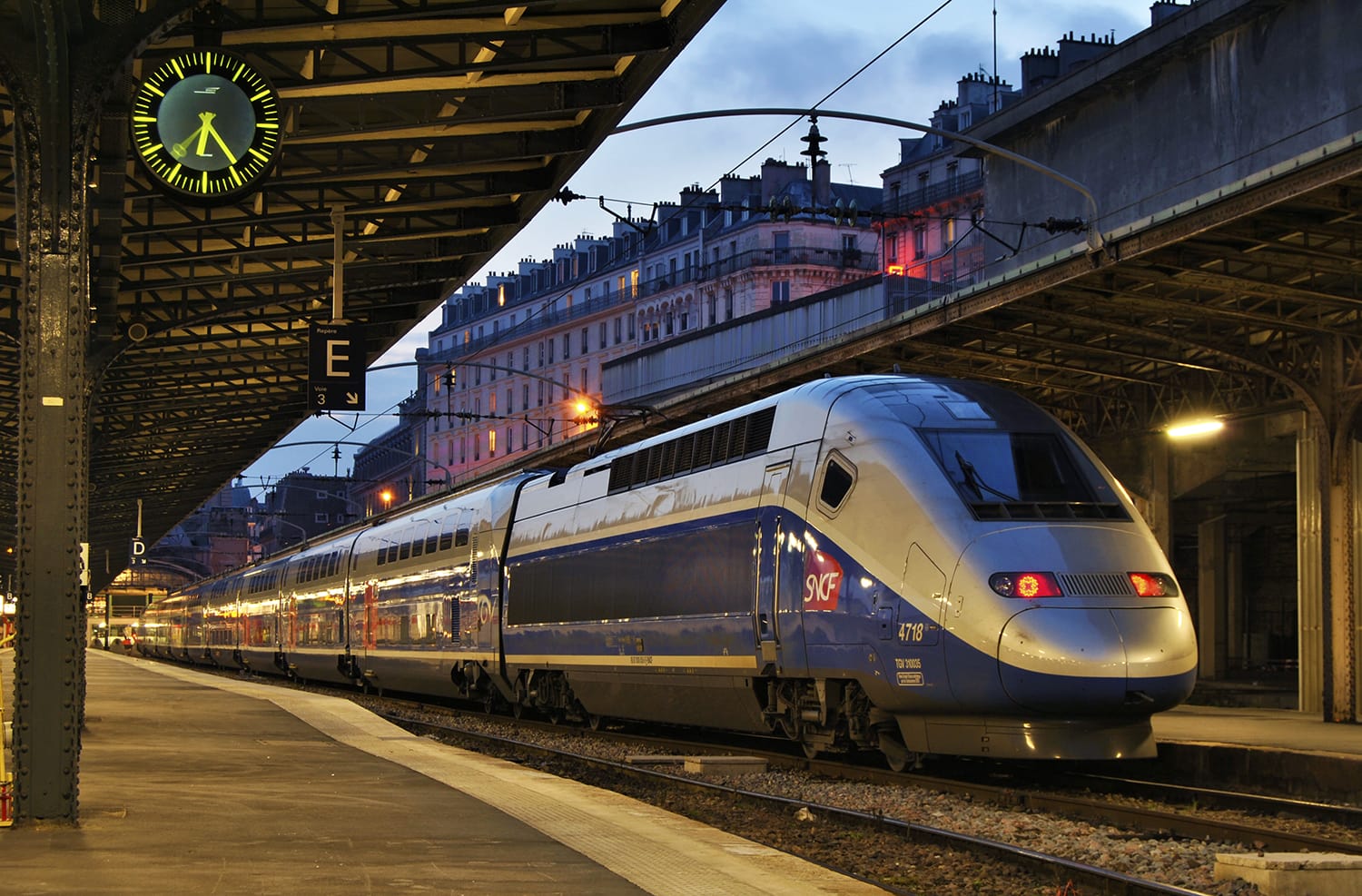
1. Le TGV

When most people are asked what the French are known for, not many will answer trains. But yes one of the most renowned brands in the world is the French TGV (Train à Grande Vitesse, which literally translates to the unimaginative 'High Speed Train'). The TGV is the fourth largest and one of the fastest commercially operated high speed train networks in the world, with trains reaching up to 320km/h on a rail network that saw the fastest TGV ever produced break what was at the time 578km/h world record in 2007.


All I can say about the TGV is that it is an experience.


10 September 2017

Number 1Thing To Do In My City

I live in a city with a mouthful of a name. Bellegarde-Sur-Valserine. It so happens to be the point where the Valserine river meets the Rhone River as it exits Lake Geneva (Lac Léman). Besides that the city has no other claim to fame. It is 25 minutes from Geneva Central therefore happens to be one of the few French cities closer to a major foreign city than it is to a major French city. I wish I could lie and say there is much to do in this God forsaken back of beyond but Lord, I will not lie. The one thing one should do if one ever finds themselves in this city is to get out. Which is what I often do. Bellegarde happens to be 3 hours from Paris and 1 hour from Lyon.

So the number one thing to do in Bellegarde Sur Valserine, is to leave.

I will however leave you with some photos of this back of beyond.


08 September 2017

The Face Of God

God used to smell of incense. He was ritual and the silence of the church. He was song as the choir burst into song and a thousand students stood as the priests made their way to the altar. He was light and darkness, beauty and golden chandeliers, He was there and not there. The three priests would turn to face us. "The Lord be with you", they would say. "And also with you", we would answer. And also with you.

The chapel at my high school, St Columba's Anglican High School, Bulawayo, Zimbabwe
God was my face the day the Headmaster made me stand up in front of the students. I used to like to sit in the very front row of the church, all the better to hear the music and watch the rituals unfold in front of me. The breaking of the host and its mysterious transformation into the sacrifice. The pouring of the blood red wine into the silver grail as the choir exploded into song, Igama lenkosi malibongwe. The girls soprano dancing above the rumbling of the boys tenors and bass. I would march up the red carpet and take my seat and watch in wonder and awe, sad that I could not take part in any the communion because I was a Lutheran and not an Anglican.

Usually I would leave unmolested but that day the Headmaster, who was also one of the Head Priests was bellowing through his sermon then suddenly he waved, "you are all made in the image of God. All of you. Love one another because God is in each one of you. You have the Face of God". He looked around and let the words sink in, then he grabbed me by the arm as he gestured for my terrified self to stand up and face a thousand students. "In fact, even this small boy, look at his face. If you ask yourself what God looks like, he probably looks like this." The teasing endured for months. 

Njube Lutheran Church where I was baptised at eight months (c) Agneta Jürisoo and Mats Lagergren,
God was harsher and more stringent at our humbler church whose domes made it look more of a cross between a mosque and a museum. The wall was covered in white plaster that rubbed off on your clothes if you leaned against it and the louvred windows reached almost up to the top of the building letting light stream in throughout the service. Here God was simpler, no incense and no golden chandeliers, the candlesticks were made of simple metal painted black and the flowers picked from the garden outside. No high tech public address system nor red carpet. But He was louder, harsher, more demanding. He was the voice of the pastor whose robes would flail from behind the lectern as he warned us all of the consequences of sin, of the dangers of death, of the evils of the world. My heart beat in wariness of the sins I knew I had committed and in mortal dread of the sins I didn't know I had committed and in absolute horror at the sins I might commit. 

God was mystery at my A-Level school. His words had turned from Shona and Ndebele to Latin as five hundred boys repeated after the brothers. Kyrie elysion, Christe elysion, Kyrie elysion. He was wrapped once again in incense but this incense formed thicker clouds around him with words of dogma, of history and traditions and messages from a Pope, (or to use his formal title: His Holiness, Bishop of Rome, Vicar of Jesus Christ, Successor of the Prince of the Apostles, Supreme Pontiff of the Universal Church, Primate of Italy, Archbishop and Metropolitan of the Roman Province, Sovereign of the Vatican City State, Servant of the servants of God.) in the Vatican, thousands of miles away who spoke on His behalf and whose spirt we regularly prayed for. God's mother, Mary, was suddenly everywhere and she was prayed to. Prayed to for her mercy and intercession so she could speak to this mysterious God on our behalf. He was incredible wealth as the brothers spoke of the many other schools like ours around the world but he was also service in action for the poor and oppressed in the world.

The Pietà Madonna by Michelangelo in St Peter's Basilica, The Vatican

But in an instant God became nonsense in Algeria. Suddenly the privilege from living in a 99% majority Christian country disappeared like the morning dew when I found myself in a 99.8% majority Muslim country surrounded by a fraction of the almost two billion Muslims around the world. God was hidden Bibles on our way to church, covered crucifixes around our necks, was a thousand inquisitive questions, some friendly, others harsh where suddenly a lot of 'simple' things became extremely difficult to explain.

"So you have three God's n'est pas?" "No, we have one God". "But you just told me that Jesus and this Holy Spirit person are also God no?" "Yes, yes but they are one." "You literally don't make any sense at all you know that, plus you said God died on a cross!" Latin words and dogma lying in a library somewhere in the Vatican somehow started feeling less comforting. "So this Bible of yours has many versions but some versions are the true one and the one you follow is one of the true ones but not some of the other ones whom you call cults....who gets to decide heh? You know the Koran only has one version?"

Anger and frustration would rise, but also questions that led down paths that sometimes had no answers. Like the time when I was a child and I had piped up during a Bible study session; but if God was really so good why did he put the Apple tree smack bang in the middle of the garden? My question hung in the air like an unexploded bomb until someone told me not ask such silly questions. Perhaps God's answers were in the mosque I attended with my friends several times but the flood of Arabic only raised more mysteries. Perhaps God was only in Zimbabwe and this was indeed a people doomed to fate. Perhaps he was in the Vatican whispering answers to the Pope. Perhaps he was in the streets with the prophets who screamed fire and damnation was nigh to anyone who was not in their denomination of Christianity, one of 38, 000 worldwide. What did I know? Nothing.

I looked at my Algerian, Muslim friend, his face screwed up in confusion at the crawling mass of my stories of this God of ours against the injunction of his Allah. And then I heard Mr Moyo's rumble of a voice from that incense filled building, Your friend has the face of God.

Love him. 


07 September 2017

My Top Ten Songs From Zimbabwe

Today's blog takes us to the world of Zimbabwean music, specifically my Top Ten Songs from Zimbabwe. For those who are actually Zimbabwean, forgive the 'datedness' of my list, (and the Shona translations (hides)) it has been years since I have continuously lived in Zimbabwe. 

The reason I love lists like this, making and reading them, is that they allow people to discover music they might not otherwise have ever heard. Click here for a similar list I compiled for my favourite French music. And now to Zimbabwe....

10. Ammara Brown - Mukoko

Ammara Brown is one of Zimbabwe's newest stars. She is also part of a family rich with musical legacy, her mother was Chiwoniso Maraire, an international legend on the mbira and her father was the musical genius Andy Brown, both sadly have passed on. In this song, Mukoko (the Shona word for honey) Ammara proudly proclaims that she isn't just a babe (a honey in Shona slang), but a real woman. The video is one of the best choreographed Zimbabweans I have seen in a while, with splashes of colour and the ambience of the township.
Best line: I will sing for you and make you my hubby. But you gotta treat me like a treasure. You gotta treat me like a treasure!!! 


9. Hillzy & Oliver Mtukudzi - Ndiwe Wega Uripo (Trap Soul Remix)

I actually had not heard Hillzy before this song and I never knew there was a Zimbabwean trap singer, much less a trip soul artist. Surprises never cease. In this soulful remix of Oliver Mtukudzi's Ndiwe Wega Uripo, Hillzy raps above the melody of the echo of the original song and then harmonizes in a haunting chorus. I wish this had a video!

Best line: Ndiwe mumwe wangu, ndiwe wega uripo...(you are my better half, you are the only one there)


8. Tricky J - TAMBISA DAKO ft.Sinte & KYD

This song was banned on Zimbabwean TV! And if one if familiar with Zimbabwean conservatism, one can begin to understand. Who cares! I love this song, the beat is amazing, the choreography is great and the video is so funny! Even funnier for me was that I initially had no idea what a 'dako' was, my Shona whilst passable is hardly perfect lol. 

Best line: Tambisa dako!!! (Shake that ass!!!)


7. ExQ - Bhachura ft. Ammara Brown

Ammara Brown makes another appearance on my list, this time with ExQ, a popular Zimbabwean urban grooves singer. The video is heartbreaking and the lyrics are bittersweet, a recently single young man singing that it was better being single. Relationships huh? 

Best line: Everything Ammara sings! The passion in her voice. Tjoh.


6. TINASHE - Bated Breath

This is technically cheating, because Tinashe is technically American. But in my defence, her name is Shona and her father is Zimbabwean so there. I will claim her back as one of our own! What makes this song even more special for me is that I was listening to my random Spotify Daily Mix when this came up on the playlist. Not even knowing that it was a Zimbabwean born singer, I played it over again and again.....


5. Chiwoniso - Wandirasa

And the Queen of the Mbira is Chiwoniso! This discordant hymn to pain is one of the most haunting Chiwoniso songs I know. Her voice rises above the mbira filled with pain and a cry to be released from pain. An ode to a lover who has abandoned her, the title literally translates to 'You have thrown me away' (it's amazing how one word can turn into an English sentence!)

Best line: Something about you baby has touched me deep inside, I can't explain it to you. No matter how hard I try to stay away from you but we both know it will never be the same.....(and the screams in the end that haunt your dreams long after)


4. Oliver Mtukudzi - Neria

This is a song that a lot of Zimbabweans will resonate with no matter what language they speak. A song that reminds us of the award winning movie Neria about a widow whose in-laws throw her out to the streets to fend for herself and her children. Decades later I can hardly remember the details of the movie but this song takes me back to the first day I heard it as if it was yesterday. Oliver's voice and the guitar of which he is one of Zimbabwe's unrivalled masters gently sing to comfort Neria, telling her God is with her, not to lose heart and to be strong. 

Oliver Mtukudzi's CV is too long to list here. With countless albums, countless awards, work as an ambassador for UNICEF and the Cavaliere of the Order of Merit Award from the government of Italy, we Zimbabweans simply know his as Tuku.

Best line: Usawore mwoyo kaNeria, Mwari anewe.....shinga moyo shinga! 

(PSA & shameless plug: head over to www.zimhealth.org, an organisation I am part of and who have as their Ambassador for Health none other than Oliver Mtukudzi!)


3. Mafriq - Chizevezeve

When I left Zimbabwe in 2007 this song had just come out. And I remember at the time it had one of the best music videos I had seen for a Zimbabwean song. The song itself is an morality song, a young couple singing of the work of gossipers who are never happy when people are happy but always happy when gossip and bad relationships abound. The Shona was so deep for me at the time I had to ask a few of my Shona friends to translate the song for me. 

Best line: Nhasi vadanana, mangwana varambana. Chenjerai kunyara makuona vachichata (today they are in love, tomorrow they are fighting, watch out will all your gossip because one day they will be married)....[Shona transcribing skills fail here] when the girl told the boy her name was Chido and the boy lied back and said he was Tindo, all of you were not there, you have no shame!


2. Pah Chihera - Runonzi Rudo 

I actually don't know much about these two singers but I love the song and the video. Lovely, happy and colourful. The title translates to 'It's called love'. 


1. Chiwoniso - Iwai Nesu

I won't lie, I was going to add another Oliver Mtukudzi song to the list, he is one of my favourite singers but then I remembered that there is a song I listen to when I'm down. A song whose smooth voice comforts me, whose prayer reminds that the world, an unfair place as it, is still a place of beauty.

One of Chiwoniso's last songs before she died, Iwai Nesu, (Be with us), is a song & a prayer. It pleads with God to be with us. To listen to us. To see a world ravaged by injustice and be our Father. The mbira, played by Chiwoniso, strums  in the background as she reminds God that we are His children.

Best line: Vamwe vaparara nendzara, vamwe vachifa nekuguta, kumwe vaparara nemvura, vamwe vechipera nezuva....Tirivana venyu.... (There are those dying from hunger, whilst others are dying of gluttony, others are washed away by floods and others are finished by the sun...We are your children!) 


PS: Some will remark that all these songs are almost entirely Shona, a language I learnt at the age of ten, and not my mother tongue, Ndebele. I noticed it today and perhaps that is the subject of another blog post? Perhaps. Probably. 

05 September 2017

Are My Parents Included In My Retirement Plan

Today's Blogging Challenge Topic posed the question; Are My Parents Included In My Retirement Plans.

My immediate reaction:


Quickly asks Google, "Does that imply saving money?"

Google: "Yes..."

Me:


By now you will have surmised that there are no piles of Ncube cash stockpiled in a Swiss bank account waiting for my dying days.

You mean not every weekend has to look like this?


But it's difficult to even start preparing for the future when money seems so transient and expenses seem so insurmountable. 

But true story, before starting this challenge I started reading Rich Dad Poor Dad, a 1997 book written by Robert Kiyosaki advocating the importance of financial literacy. My conversion to wanting to be one of those 'grown up' people saving money bit by bit, and planning for the future came after I saw a chart of a typical American life plotted in weeks. Let's be honest, we all live as if we shall live forever, especially in early adulthood; death and old age are vague conceptual things that have no place in our every day. But when faced with a graph like the one below, there is something in me that understood as if for the first time, the unyielding passage of time.

Where are you on the graph? (source)

I am still in the process of learning the dark magic of saving money for a rainy day, let alone money for the day that I am (heaven's forbid) old. So for now, sorry to disappoint folks, there is no retirement plan!


Check back with me in a bit when I have learnt some more. 

04 September 2017

How Not To Live

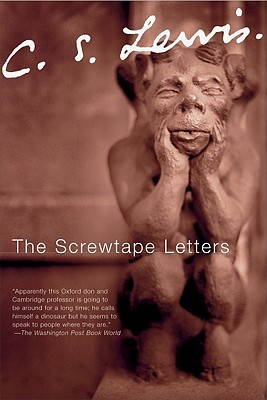
For some strange reason the humorous and funny blog post I had crafted in my mind died before it was born. Instead I am left with the reflection that came to me years ago when I read a novel by C.S Lewis, the author of The Chronicles of Narnia among other great works. But before I get to his book I want you to imagine something.

Imagine Time is an illusion. Imagine, if you can, that the past, present and future all happen at once. You can assign whatever reality you want to this concept, be it God, the Divine or the delusions of your dear author. But to whatever entity you imagine Time to be, imagine this entity is a silver circle, with no beginning and no end, merely flowing infinitely from itself and from itself; never-ending, never-ceasing, never-starting. We shall call this circle Eternity (This in and of itself is another difficult concept, what is Eternity? But let us leave that for another day, let us not chase too many rabbits down too many holes at once).


Now imagine a straight line, reaching from somewhere and stretching to somewhere and in your mind that line touches that circle at one point and one point only. In Mathematics, we would call that point a Tangent and it would be the only point in the entire universe that the circle touches the line. But in our example where the circle is Eternity, that line is no longer just a tangent, but the Present. There and only there should life be lived. There and only there should the focus of our desires and our passions and our joys be concentrated, there and only there does regret have no power and fear no strength.

Years ago, an Australian man gave this example to me and I would like to boast that I understood what he meant as we sat by the fire in middle of winter in Bulawayo. My mind grappled to see what all this nonsense about circles and lines meant. He could see it in my eyes and I remember he smiled at me and said, 'simply put, Bongani, it means Live in the present moment'. I smiled with joy; now that was concrete enough for me, an instruction that could be made sense of and lived to but as often with these things, it is easier said than done, even more so when the logic behind was fuzzy to my teenage mind.

And then this is where we return to C.S Lewis. In his book, The ScrewTape Letters whose 'author' is a Senior Demon in Hell and is in the form of Letters to his nephew Wormwood who is on earth trying to capture a human soul; ScrewTape writes the following advice:

The humans live in time but our Enemy destines them to eternity. He therefore, I believe, wants them to attend chiefly to two things, to eternity itself, and to that point of time which they call the Present. For the Present is the point at which time touches eternity. Of the present moment, and of it only, humans have an experience analogous to the experience which our Enemy has of reality as a whole; in it alone freedom and actuality are offered them. He would therefore have them continually concerned either with eternity (which means being concerned with Him) or with the Present — either meditating on their eternal union with, or separation from, Himself, or else obeying the present voice of conscience, bearing the present cross, receiving the present grace, giving thanks for the present pleasure.

Our business is to get them away from the eternal, and from the Present. With this in view, we sometimes tempt a human (say a widow or a scholar) to live in the Past. But this is of limited value, for they have some real knowledge of the past and it has a determinate nature and, to that extent, resembles eternity. It is far better to make them live in the Future. Biological necessity makes all their passions point in that direction already, so that thought about the Future inflames hope and fear. Also, it is unknown to them, so that in making them think about it we make them think of unrealities. In a word, the Future is, of all things, the thing least like eternity. It is the most completely temporal part of time — for the Past is frozen and no longer flows, and the Present is all lit up with eternal rays. 

...to be sure, the Enemy wants men to think of the Future too — just so much as is necessary for now planning the acts of justice or charity which will probably be their duty tomorrow. The duty of planning the morrow’s word is today’s duty; though its material is borrowed from the future, the duty, like all duties, is in the Present. This is now straw splitting. He does not want men to give the Future their hearts, to place their treasure in it. We do. His ideal is a man who, having worked all day for the good of posterity (if that is his vocation), washes his mind of the whole subject, commits the issue to Heaven, and returns at once to the patience or gratitude demanded by the moment that is passing over him. But we want a man hag-ridden by the Future — haunted by visions of an imminent heaven or hell upon earth — ready to break the Enemy’s commands in the present if by so doing we make him think he can attain the one or avert the other — dependent for his faith on the success or failure of schemes whose end he will not live to see. We want a whole race perpetually in pursuit of the rainbow’s end, never honest, nor kind, nor happy now, but always using as mere fuel wherewith to heap the altar of the future every real gift which is offered them in the Present.


I remember reading that passage so many years ago and suddenly the story about a Circle and a Line came into clear focus and made perfect sense. Epiphany is a word one should rarely ever use but that moment seemed to clear the dullness from around me as I truly realized what my Australian friend had meant all those years ago. A life given to the past is lost in the regret that captures its heart. A life longing to the future is lost in the imaginations and fears of a Time that has not, and might not, ever arrive. And for so many of us that is how we live; captured by the points of the Circle that our lives are no longer in contact with or longing for the ones yet to come, and forgetting the one part that is Real: The Present moment.

I wish I could say I knew how to fully live in the Present Moment; that I had figured out the secret of the Universe and the mysteries of Life and Joy. But alas, your author is still plodding his way along trying to figure it all out. One thing I do know is how not to live: in the Future or in the Past.