Pages

Showing posts with label literature. Show all posts

15 March 2015

Remembering Home, Remembering You

I remember the sun peeking over the horizon as if it was scared of announcing a new day. But already the light of its glory has set the sky on fire and the day has begun. The rooster crows in agreement and I lie in bed, this feeling of deliciousness inside me. The joy at being alive, of being here, inhabiting this space, this time, being home. Outside, the dew covers the delicate fronds of grass and hangs from the rose petals, a delicate beauty dripping like diamonds from the soft pink of the buds.

I remember that beauty. Beauty of the garden I kept myself, worked every Saturday to water and mulch. I remember the stark blue of the sky in winter. Cloudless and stretching like the mind of God to the ends of the world as I lay in the grass watching it. Innocent. Guileless. Clueless. My world was limited to the borders of the city I had been born in, Bulawayo: the place of killing. I began each day as I always did; a bowl of porridge. On a good day, with a tablespoon of peanut butter and generous amounts of sugar. I never understood those who put butter in their porridge, I was always a peanut butter guy. I haven't had porridge in almost ten years.

I remember the avenues of Bulawayo lined with jacaranda's in October. That is the image most tourists have in their heads, the image that a quick Google search will give to you: streets covered in a carpet of purple, drops of perfume falling from the trees to the ground where they lay waiting to be squished by the wheels of cars or your feet as you passed by on your way to the shops to buy a loaf of steaming fresh bread from the Hot Bread Shop. But an image less know about is an image of the Flamboyants that bloom in early summer and explode in a red as deep as the eyes of the setting sun. Some are isolated trees, lost amongst the crows of the Jacaranda's, but some are armies that line Cecil Avenue on it's way to meet Hillside Road, standing guard over the narrow road like loyal red sentinels watching over you as you pass by.
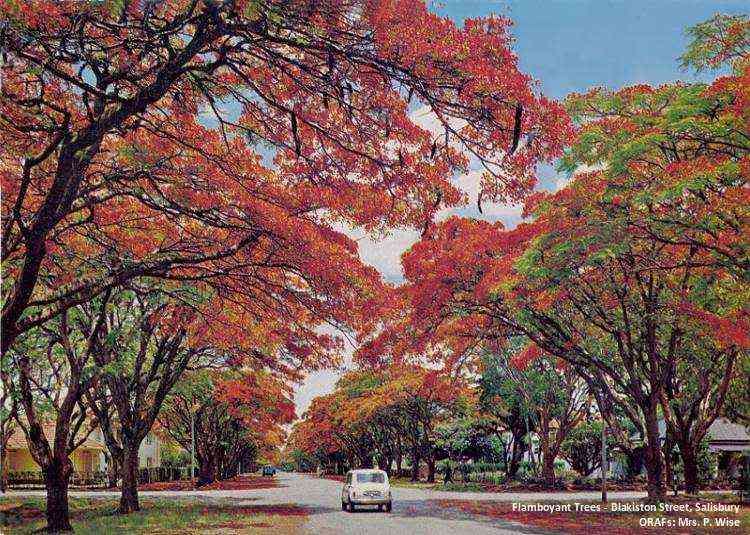
"Loyal red sentinels watching over you as you pass by..."
(c) Mrs P. Wise
I remember my first high school. Nestled deep in the heart of Makokoba, its green solitary field, an emerald that I told myself would one day watch as I played soccer to the applause of a cheering crowd. That never happened. Instead I lost myself in the brown face brick buildings, discovering science and literature and a world I had never imagined existed. Hard working men and women showing up every morning to make sure one thousand children each got an education that would arm them for a life in a country that was beginning its slow decline into madness. But what did I know of that? For me life was scrunching up my noise on days when the sewage in Mazaye decided to smell and waft into our Maths class as we tried to concentrate hard on these things called variables. Or the smell of incense during mass at school that made me wonder if God smelt like that; mysterious, stuffy and holy.

I remember you. Remember the force of your being, the beauty of your soul. The way we laughed all day never once thinking that it would all end. Remember the way you and I walked through the streets of that City we both called home, looking for what it was we did not know. But perhaps it was just looking for the happiness of existing in each other's world, sharing the space that Universe had loaned us, given to us and whispered softly that she would take it back one day. But we never heard her did we? We walked carelessly past the white splendour that was City Hall, sat our buttocks on the hard pavements as we waited for our kombi to go home, the squalid beauty that was the flea market with old women selling tomatoes. The freshest tomatoes in the world they said, the most beautiful, juiciest and reddest of them all: all for just two dollars. Two dollars only. I would give every dollar I had to have those days back.

I remember Christmas. No, nothing like the spectacular December lights on the Champs Elysée in Paris. Nothing fancy that sparkled in the flash of tourist camera's and makes them catch their breath. More humble, more basic; static lights stretched over Gwanda Road, all the way past the greens of Centenary Park, in the shape of a fat Santa, reindeer and spelling out Merry Christmas and a Happy New Year. Or perhaps it was one of the Christmas' I spent in the village with my gogo, the smell of the manure that was used to create the hard floor of the huts fading more and more into the background as each day passed. I regret never having milked the cows, never having carried a bucket of creamy milk to gogo milked by my own hands and waiting for her to congratulate me in Sotho, a language that I still do not understand.
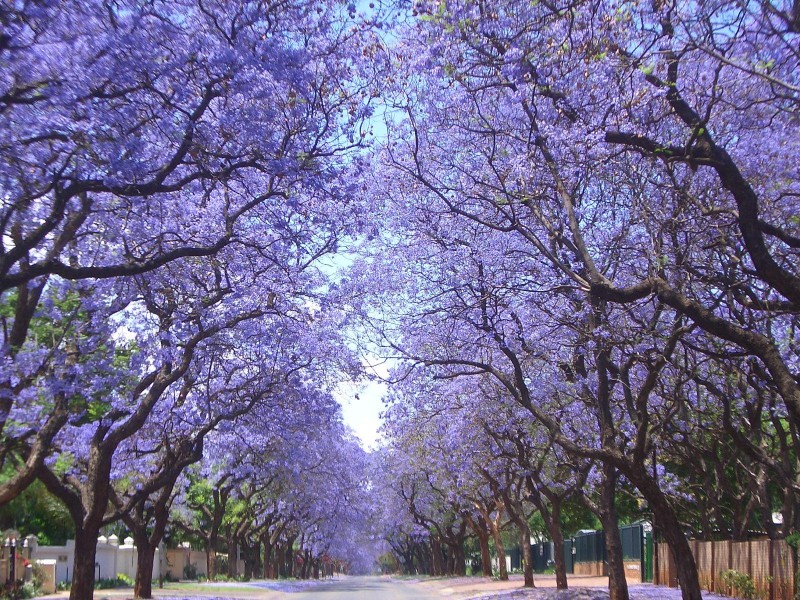
"I will be lucky enough to go and live out those memories waiting to happen..."
Source: RedJBishop
It's funny no? One regrets the things one never did. I don't regret the day I froze in front of the entire school when I was supposed to give a prayer. I don't regret the friends I made who would later leave me, the days I spent carved into the hard stone of my memory that I will pass my hands over till the day I die. Instead one regrets the roads untravelled, the sights unseen, the words unsaid said to you. But perhaps one day I will be lucky enough to go and live out those memories waiting to happen. Add them to my memories of a City that calls out to me in my dreams, whispers to me in my days and says only one word, a simple word that tugs on my heart with such force I fear it will break.

Home

27 February 2015

And Then The King Fell

"Gogo tell me a story", Mandla piped up in the failing light. His voice piercing through the gathering darkness with all the innocence and insistence that only a seven year old has.

Gogo stirred from whatever depths of thought her mind had descended to. For a moment she seemed as if she hadn't heard the question, her face expressionless, a calm sea upon which a wave of laughter burst. She cackled for so long even Mandla began to worry that finally Gogo had finally lost the last of her wits as mama said she would. Mama did not really like this Gogo that much, Mama liked the Gogo who was her mother and not this one who was Baba's mother and spent her days wrapped in her silent thoughts. 

"You want a story do you?" Her voice was strong but breathy. The question hung in the air for a moment before she went on. "You want a story and I will tell you one, I will tell you a story of a King, powerful and royal. A King who mounted the world and thought the Sun revolved around his balls".
Mandla giggled, he liked it when Gogo was in this mood, he knew the story would be good. He stood up and went to snuggle against her, his eyes closed and very soon his whole world was Gogo's voice. Gogo's powerful voice weaving its threads through the darkness. 

"Once long ago, long long ago back when the stones were still soft and snakes had legs; long ago when Elephant's nose had not yet been stretched by Baboon and Cheetah had not painted with spots by Hare. Long ago in this very land lived a powerful King who ruled his country with a stone fist. His people were the saddest in the land and yet their lands overflew with maize and their rivers with gold. They could not speak because the King did not like anyone but himself to speak, for he thought his voice was the most amazing thing in the world. They could not think for the King felt that only his mind held anything of interest. And while his family were the fattest in the whole grasslands, their skin soft like that of the plum in summer and their hair black and shiny like the inside of a Mamba's mouth; his people starved, their stick-like figures standing like praying mantis' in the harsh glare of the light of day.

"while his family were the fattest in the whole grasslands..."

People came from far and wide to this land to trade gold with this King, and precious stones and maize. They came from the Northern lands where the sun shines all day and rests only for an hour before rising again. They came from the East where the jungles are so deep and dense demons live in the darkest corners of that land. They came from the West where they worship fish yet eat them more than anything else. They came to trade and the King and his family grew fatter and richer than all the lands that had come before and all the lands that were to come after. Or so they thought."

Here Gogo paused. The Sun had now set and the smokey interior of the hut was now completely dark. But she didn't motion to Mandla to look for the candles so he stayed snug and calm in her embrace.

"No one knew how it happened but those who served the King became blinded by his wealth. Perhpaps it was the sight of the gold that dripped from his body, or perhaps they were blinded by the gleaming rolls of fat that rolled off his fat belly. Some say it was the witches of the West who had been bribed by the King's diamonds who bewitched them but soon the entire land was bewitched."

Gogo's voice grew dark and heavy, punctuating the hut, reverberating against the mud walls and making Mandla grip tighter into her shawl.

"They grew crazy, worshipping the ground he walked on. What little food the people had, they gave to the already fat King to celebrate the day of his birth. One time in the middle of a drought, they slaughtered so many cows and goats, the waters of the River Nkawe turned red for seven full days and seven full nights. Even as the people slept under stars for lack of homes, the King built more and houses for him and his Family. While his people walked, the King used the gold of the land to buy horses from the strange lands of the North. While the children of the people went to sleep hungry, the King used the silver of the land to buy fish from the lands of the West; smoked fish, spiced fish, dried fish, fish aged for centuries in the ageless storerooms of the Western people and whose taste is said to be unrivalled by anything under the sun. Whenever he spoke, his Royal Servers would drop to the ground and thank the heavens for having been blessed with such Knowledge. Whenever he would deign to look at one of them they would freeze, afraid of upsetting the balance of the Universe if they made one wrong move in his presence. Very soon they began to call him not only their King but also their God". 

Gogo spat out that last word with such vehemence she began coughing. Her rough heaves felt painful to Mandla but he sensed a deeper pain in her. He clutched tighter to her side, afraid the King would materialise in the hut and bewitch him into thinking of him as a God. Gogo was silent for so long, Mandla feared she had fallen asleep. 
"What happened next Gogo?", his voice was now plaintive, "what happened to all of them". 

To Be Continued....


26 May 2014

There Is A Joy

There is a Joy. He sits by the river, his arms stirring up the crystal water, his eyes trained on its depth, his smile brighter than the sky. His skin laps up the rays of the sun like the ground after the first rains. He sits alone but not lonely. He is not large but by no means weak. He is what he is. Joy. He looks into the water and sees the many examples of himself in the world and his smile turns into pure mirth.

There is a joy of the mother as she holds her newborn baby in her arms. Unable to believe that her body has done that most mystical of miracles, that most sacred of biological functions, that mystery above all mystery: create life. And here is the life in living, breathing flesh. Its eyes screwed shut against a world it has found itself in, uninvited, a world it did not ask for but nonetheless a world that has welcomed it into its family. A world it shall know, a life it shall live with all its attendant joys and sorrows, all its pains and lows, the highs and the peaks of ecstasy. It shall know the joy of eating, the joy of learning to walk. It will feel the pain of falling from its feet to the ground and from its dreams to reality, the crushing pain of a broken heart and the sweetness of watching the sun set on a day well spent. But for now it knows nothing but the fact that it needs to cry. And announce to the mother who will hug her to its chest and feel her heart burst with a love she shall now spend her life giving it.


There is the joy of art. The joy of the writer as he bleeds his life onto the page, the musician as his spirit is picked up in the arms of his music and flung into the higher reaches of heaven. There is the joy of the poet that most subtle of beings, that being whose heart has found the pulse of the universe beating to the same rhythm. The rhythm that the dancer dances to as she lets her arms soar, rise and fall following the pulsating joy that is found when humanity and art meet. Oh there is pain in it all to be sure. What part of being human does not capture pain? Surely there is pain in the hands of Michelangelo as he silently chips away at the marble to release the figure buried within or the pain of the photographer who has missed that perfect shot. But there is joy in the end, such sweet joy when life lies captured in ink, in stone, in words, in music, in the arms of the stage.

He smiles, his eyes lighting up with the happiness of one who has heard a music that only the Wise can hear; the sound of the universe singing your name. Now he sees two figures in the flow of the river and recognises the joy of young love. Not the flames of passion, or the dangerous scouring heat of lust. No he sees the pure tendrils of young love spread themselves softly, silently around the hearts of two people who in each other see the being that they had glimpsed only briefly before they were born and spent a lifetime looking for. And now have found. And they have found more than that haven't they? They have found the one in whom they can let their hearts repose, the one who can carry their secrets and their burdens, the one who will carry them when they can no longer walk the tortuous path of life, the one who will still be there when Beauty has moved away and left Age to take her place. No need for words for these. Silence is enough. No need for diamonds or trips to Paris, the clasp of their hands transmits a joy which makes Joy's muscles tense up as he sits and regards them in the waters flow and soon he breaks into laughter.


And what is laughter than the noise joy makes when it is can no longer take any more of itself. It rises on itself, into the air around him, tiptoeing over the corners of his mouth as it pulls them into the most genuine of smiles, unlocks the reservoirs of his eyes and lets the tears run freely down his cheeks and into the air it lets out a sound of such sweetness, a scandal of joy, a peal of happiness, an unashamed pleasure in the act of existing. He laughs and bends over himself as he dips a finger into the river and looks deeper into its depths, his eyes bright and clear through the film of tears.

He sees the small joys of a million billion people. The joy of a father as he receives a letter from his son on the battlefield, the joy of a couple as they untangle themselves from the throes of lovemaking, the sweat on their backs not yet dried but something beautiful stirring in their hearts for each other. He sees the joy of two best friends who have discovered that the flame in their hearts burn with the same colour. He sees that infant born to its mother as it returns her hug decades later, the joy of a prophet as he hears the Voice call to him to silent worship, the first drink of water of a thirsty biker, the first step of freedom of the prisoner, the first pay cheque of the new grad, the child who finds a toy it thought was lost. Millions upon countless billions of tiny joys that make the troubled existence of these humans worth it. Joys that can illuminate the darkest of cells, salve the deepest hungers, calm the most turbulent storms that trouble the souls of so many of them. So many examples of himself in their world looking back at him through the troubled depths of the water but still he stirs the water and stirs, his legs cutting through its icy depths until at last he sees what he is looking for.

He sees her there. The most beautiful form of joy there can be. A joy that has found the secret of existence, has transformed life from an act to a sacrifice, to a worship of each passing second, a love that has spread beyond just those around her and has grown to embrace people she has never met, the Joy who cannot sleep while someone she knows goes hungry, who agitates for those she does not know and feels their pain deeply in their heart as the cutting of a knife sharper than the spears of demons. A love that does not know the colours of any flag but simply the colour of the blood that runs through the veins of every person who breathes in their world, a love that realise whether the Others worship snakes, or monkeys or the Son of a Virgin they still share the same humanity as she does. A humanity as sacred and as powerful as the stars that burn in the heavens for every human who ever had the chance to make their mothers sing for joy.

He sees her and smiles. She sees him and for a moment, a moment ever so brief, spliced between the fingers of time herself, she smiles at him and disappears. Even he Joy has seen her rarely in all his centuries by the riverbank. And even less people have ever known she exists. But for them that do, their Joy was complete and when the day came for them to breath their last they did so with the knowledge that he stood waiting on the other side of the Gates of Death. With a smile on his face.

For you | Für dich


15 February 2013

Voices of Africa

Are you ever one of those people who complain (loudly) about the portrayal of Africa in (Western) media? I know I am one of them and I have written about it several times (including here on the Global Changemakers site). Well I was told long ago that complaining and then proceeding to do nothing about the thing which you complained is just as good as keeping quiet and I want to challenge you all 'complainers' out there take part in an amazing project that has been doing something about the image of the African continent and the people who populate her lands.

Voices of Africa is an ambitious project launched by the Mail and Guardian some years ago that aims in their own words to: 
"..tell the stories the world doesn’t hear often enough. We believe the everyday accounts of Africans getting on with life and showing adversity the middle finger deserve more attention. From the fashion-crazy women in Dakar to the eligible bachelors in Somalia; from the extravagant weddings in Tanzania to the nightlife in Nairobi, we want to showcase life in Africa by those who live it."
I find a quote by the Editor of Voices quite profound, she talks about the negative vs positive extremes we see so often in the media and says something that for me sums up the whole project: "An emerging market”, “exotic” women, technology booms, safaris, and National Geographic-worthy sunsets don’t sum us up either. They reduce us."

We are people before we are Africans. Just like the Europeans, the Asians, the Asians; we are just people with all their consequent faults, strengths, joys and profound sorrows. And that is the story the world needs to see more than exclamations about how great it is that our literacy rates are improving or how sad it is that wars have blossomed in several African states. The fact that those Africans fighting those wars, those African grandmothers learning how to read in a shack in some distant rural village are just people. Add your voice, head on over to the Voices of Africa site, take a look at the guidelines and submit your story for publication. :)

I dare you to change the way the world views our continent.


15 May 2012

The Emperors have no clothes!!!


One of the defining moments in my relatively short life was picking up a book called ‘The First Man in Rome’ by Colleen McCullough at the Bulawayo Public Library, that hallowed place where I went every weekend to soak up the masters of literature. In those books I came across the political greats such as Gaius Julius Caesar, Augustus Caesar, Marcus Tullius Cicero and Gaius Marius. Men whose actions both good and bad shaped the rise of what is possibly the greatest Empire mankind has ever known, Rome.

Which perhaps would go far in explaining my utter disgust, my complete revulsion, my horror, the stupefaction that befell me as I read this headline: “Zimbabwe's latest way to stop HIV: Force women to have fewer baths and shave off their hair to make them less attractive”. My mind rushed for some explanation to such a startlingly stupid headline, perhaps it’s some comedian or stupid TV presenter running their mouth off. But alas. Dear reader, these words were uttered by none other than a member of the Senate of the Republic of Zimbabwe. The Senate!!! The halls of highest legislative body in the land, the halls that bear the same name that the Roman Empire gave to their own decision making body, the halls that are to be the fount of the will of the people, the laws of the land, the dignity and gravitas of the State; The halls populated by such idiots.

I am over reacting I hear you say? How can I honestly take one measly line, probably taken out of context and run my mouth off? The problem this is not the first time. A few years ago, another Senator announced in all innocence that scientists should drop whatever it is that they were wasting time with and invent a drug that stops men having sex with prostitutes, and in case we were people who believed in second chances she followed that comment up with a speech imploring Parliament to distribute sex toys in prisons to stop prisoners abusing each other. Or how about last week’s comment from the Vice President of the country that her husband regularly slept away from their marriage home but that like a good wife who knows she cannot tame the bull, she had stayed. The venue for these remarks was none other than the memorial service of said late husband.


This is just a choice selection of quotes from some of the most powerful people in that country of mine. I would add more but unfortunately there are laws in place that would make it a crime (which in and of itself is saying something). These are the people who lead us, these are the people we expect to wake up every morning and chart the course the future of our national pride, our heritage, our collective nationhood along the stormy seas of global politics. These are the people who, God forbid, we expect to guide us should World War III suddenly break out and threaten the very existence of the human species. These are the people we put our faith and trust in, who we invest with the highest privileges our country can bestow and expect to damn well work their hardest to show for it. And this is what they say.

“MDC-T Member of Parliament, Thabitha Khumalo, said that women should not fight their husbands’ girlfriends, saying this could reduce the spread of infections.” 
Minister of Information, Jonathan Moyo: “(South Africans) are dirty. In fact they are filthy and recklessly uncouth”. 
Dr Joseph Made, the Minister of Agriculture who famously predicted a bumper harvest months before one of Zimbabweans biggest droughts presenting a report to parliament outlining the reasons for his oversight: “Our investigations have shown that a monkey caused damage to a transformer, thereby sabotaging our preparations for the coming season”.

Patrick Chinamasa, Minister of Justice, on dismissing charges brought against the Zimbabwean government: “"The ICC is there for serious crimes against humanity - not ordinary crime, which is what these exiles [and the South African High Court is] trying to suggest."

Google is my friend. Do not think I had to go far to get these quotes, nor that they represent the worst. Like I said before, some quotes would get me arrested so I leave the googling to you. And perhaps let us judge them by their actions and not their words? Where do you want to begin? The bankruptcy and cessation of operations that Air Zimbabwe announced early this year? Or perhaps the Zimbabwe Electricity Supply Authorities admission that power cuts of up to 9 hours per day in urban centres would continue for at least the next five years. Should we consider the famous incident where Anna Tibaijuka, a United Nations special envoy was fêted like royalty in Harare and declared to be a champion of the African Renaissance…until the day she issued a damning report that stated the governments’ ‘Operation Murambatsvina’ violated both local and international law and deprived a large number of Zimbabweans of their basic human rights.

Operation Restore Order, while purporting to target illegal dwellings and structures and to clamp down on alleged illicit activities, was carried out in an indiscriminate and unjustified manner, with indifference to human suffering, and, in repeated cases, with disregard to several provisions of national and international legal frameworks” – United Nations Executive Summary, 2005

There is a flag fluttering above the Supreme Court of Zimbabwe, another one stands proud above the Houses of Parliament and Senate and thousands more are scattered around the country and our embassies all over the world. These flags represent me, they represent the dreams and aspirations my ancestors had for me as they gazed at the African heavens centuries ago, they represent the blood of untold thousands who gave their lives fighting the fight of freedom, they represent the hope and the vision of a country born out of the ashes of a repressive regime that was Ian Smith’s government and the Mfecane that Shaka Zulu waged against my kingdom. Perhaps that flag will never fly as proudly as the purple robes of the Senators of the Roman Empire but our dreams are just as important to me, as precious and as deserving the utmost effort to make them a reality.

So I shall not hesitate in shouting that the so-called Emperors who run off their mouths calling for women to stop bathing or who strip any segment of the Zimbabwean population of their rights to liberty, to truth and to justice, that these men and women have no clothes and that they shame the hallowed halls of power of my land. They rule in the name of millions of Zimbabweans, what power we have given them, we can take away. Do not forget that Senator Morgan Femai.


Freedom suppressed and again regained bites with keener fangs than freedom never endangered.~ Marcus Tullius Cicero


17 February 2012

A letter from Bulawayo, the City of Kings

It's surprising how many people have asked me why I haven't updated my blog recently. My deepest apologies, I have been travelling and am currently in Bulawayo, Zimbabwe; the city I was born and raised in for the first nineteen years of my life. It has been a hectic week and a half which has included a job interview (anyone hiring a Computer Scientist out there? Hint hint nudge nudge wink wink), hanging out on street corners with my friends (the pleasures of being young no?) and basically seeing people close to my heart who I only get to see once in an unseemingly (my Google Chrome is insisting unseemingly is not a word but I know better) long time.

Anyway in the rush of life (I now seem to have one) it has been pretty difficult to find time to sit down and write anything let alone blog but don't worry as soon as I get back to Johannesburg I will have plenty of time to spin my usual tales and delight (or shock) you with the ramblings of a (slightly) disturbed mind. In the meantime I'd like to share with you dear readers a letter I wrote to my mother more than six years ago. She had just emigrated to South Africa leaving me and the rest of the family in Zimbabwe. I had at that point never travelled anything more than a hundred kilometres beyond Zimbabwe's borders and I could not even begin to fathom the new sights she was beholding in the famous 'City of Gold'.

I felt as if I was stuck in Zimbabwe, especially as the economic situation slid ever closer to collapse and each day was a miracle of survival. But one day walking home from school I had a glimpse of the Jacaranda's that famously line the avenues of Bulawayo, the City of Kings, and a feeling of inexplicable hope for my future, and that of the country, filled me with such inspiration that when I got home I grabbed my little exercise book where I wrote my short stories (I had no access to a computer at that time except once a week at British Council). This letter would later serve as the template to the story, Purple, that I wrote when I came back to Zimbabwe from Algeria for the first time in three years and that won the Dr Yvonne Vera Award for 2010. Life is funny isn't it? Enjoy.

--

Portrait of A Half Remembered City

It is jacaranda time again in the City of Kings again, that time of the year when the jacarandas launch their annual celebration of life. And as usual, the trees never fail to disappoint; it is a spectacular scene that blows the mind away with its beauty and for a moment hides the dark scars buried beneath.

I know that Johannesburg is one of the most beautiful cities in the world and that you are probably perpetually amazed in the City of Gold, but mom it is hard to picture anything more picturesque than the two lane avenues of Bulawayo carpeted by the fallen purple blossoms and the trees on guard in rows of two and three on either side. The gentle summer breeze occasionally stirs them and for a moment the trees come alive, waving their burly branches and discharging more purple bells into the air. Down by Ascot shopping centre, the flamboyants are coming alive so you have not only purple but red as well. It is a time of simple beauty; when the jacaranda’s rule.

Bulawayo 1975, Public Domain Image
"Portrait of a half remembered city"
But look closely and the scars become more and more apparent. Centenary Park is an insult to the word. There is nothing park-like in the dirty brown rug that covers the ground in threadbare patches. Or the once proud fountain that used to send water soaring ten metres into the air in beautiful shimmering patterns that sparkled like diamonds under the African sun. No, now the fountain stands empty, a sad reminder of the times that used to be and now are not. One wonders why they have switched it off, after all it did use reclaimed water. But perhaps the city fathers are wary of having conspicuous jets of water gushing endlessly at a time when some townships have not had water for weeks. But I think it would be an encouragement, a sign that we are down but not out. No matter what I think, the fountain stands dry and empty.

Empty is now a buzz word in Bulawayo. It describes everything from supermarket shelves to the water tanks we now keep at home. It describes people’s bank accounts as well as bakeries which now sell Zap-Nax of all things in the world. I can just imagine the management meeting that decided to shut down the ovens and fill the shelves that once were loaded with doughnuts, pies and sausage rolls; with crisps that used to be sold on the road sides, once, so long ago it seems. They must have shook their heads In silent wonder at the level to which they had sunk to but in true Zimbabwean style asked themselves, “what else can we do?” the answer must have been obvious to them as it is to me: Survive.

Scott Wheeler, GFD Licence
"...the political drought in Zimbabwe"
And that is what we do every day; we survive. Cars still fill the roads even though no garage has officially sold a drop of fuel for the past few months. People still get into kombi’s and buses smelling fresh or of the latest brand of perfume even though there has been no water for the past three days. Our smiles still reach the sides of our faces, penetrating the dark corners of our minds with the light of a bittersweet joy that helps Zimbabweans come through these dark and turbulent times. The drought that affects Bulawayo is a metaphor for the political drought in Zimbabwe. But even though the rain might be long on coming we know in our heart of hearts, that it is on its way. One day we will wake up to its fat drops exploding on our windows and the thunder chasing away the demons that lurk in the air, lightning flashing brightly like the eyes if God.

But until then, we have only the jacaranda’s to console us and heal the wounds in our hearts. The beautiful purple blossoms floating gently to the ground, whispering so gently you might not hear it if you don’t listen hard enough, don’t open your heart to the beauty of this created world. They say, “He is there, He remembers you; always.”

KENPEI, GFD Licence
"He remembers you. Always"

04 January 2012

There is a Sadness


There is a sadness that lives on the riverbank. Calmly she sits and stares at her face in the passing flow of the river of life, sometimes losing herself in the depths of the reflection of her own eyes, hair a glorious gold, framing a face of such beauty that the heavens weep for not possessing it. In the passing current she sees the many manifestations of herself and smiles: sadly, wanly, the whiteness of her skin tinged slightly by the rush of blood, the ice in her eyes melting a bit but only for a moment. A diamond tear flows down her ivory cheek and joins the flow of the river, joining the flow of countless sorrows. 

There is the sadness of the children; born into suffering, their destinies as immutable as the stars in the heavens, they shall die before they see their tenth summer. Some born into riches beyond imagining but their loneliness a vast desert they are lost in. There are some whose parents brand them every night with broomsticks, irons and kettles; anything that comes to hand but the real pain is in their hearts, torn to shreds even before they skin is turned into a bloody mess. 

There is the sadness of love. The sadness that is wrapped in red satin, perfumed in Paris and carries a thorn that inflicts a pain greater than all the spears in Alexander’s armies. There is the pain of the rejected lover, his eyes dark pits in his face, the gleam of hope extinguished from them with that final rejection. There are the used, lying in their beds, dripping from the exertion of lovemaking, still high from the adrenalin of fucking, still clinging to that other but as alone as if they were on an island in the middle of the seventh sea. Petals dripping to the ground, tears rolling down cheeks, throats aching from the exertion of crying, a sadness that touches a primal need as basic as that which commands the breath from our nostrils.

Andrew Mason (Creative Commons Licence via Wikimedia)
"There is the sadness of the lost...their wives woman they do not remember marrying"

There is the sadness of joy. Brief moments of ecstasy, sojourns on that ninth cloud of lore but knowing that the fall comes soon enough. The higher the summit, the deeper the valley. Joys temporarily brought by the nectar of the grapes, intoxicating joy that puts sorrow to flight, only to have her return in the morning with her extended family. A game that is danced in complicated circles, joys short-lived and dying every time, sadness outlives them all and dances on their graves. 

There is the sadness of the lost. Their lives in a corner they do not remember  turning into, their wives women they do not remember marrying. Deals gone wrong, faith abandoned on an empty pulpit, a flapping rag in a breeze that threatens to blow away every last one of their convictions. Memories of days when their plans were bright beacons I the distance; calling them to future successes, glory without comparison; they would be the pride of their families, the ones who would put their names on the lips of the entire village. Instead here they are, sitting beneath the shadow of decisions that at the time seemed as insignificant as the anger of a butterfly but in hindsight was the door to doom.

There is a sadness of the rejected. The ones whose every advance is put aside like the leftover remnants of a bad meal. Whose love is branded an affront to the sensibilities of those who have appointed themselves guardians of the world’s morals. Closeted and left behind they live life under a blanket of lies that grows heavier with each passing day. Surely the weight of the grave is a relief compared to the burden forced on them by the fall of the divine dice? A whirlwind of pain, hearts torn to bits, spirits weary things that look upon the act of living as a dungeon with no key to freedom. 

There is the sadness of the old. Bodies that refuse to move to the command of instruction, hands that seem to go off in directions unwanted, eyes blurred by the vision of countless memories. But as clear as crystal are the days gone by, the opportunities lost, the wishes unfulfilled, the nostalgia for a land that was never visited, the friend that died before they could reconnect, the job you wanted to do with all your heart but today is nothing more than a hobby. The coming of every days’ sunset, a reminder of opportunities that passed like thieves in the night, felt, barely seen and robbing your each day of hope. The grave awaits packed to the brim with unfulfilled dreams. 

Her eyes glimmer, she can never be satisfied. Each day she will drag another innocent into her embrace. Kiss them slightly on the lips sending a chill through their bodies, the light in their eyes disappearing like a flame surprised by a playful breeze. It is a feeling that they do well to learn for it shall be their companion till the end of their days. She shall smile into their faces until the end of time, and they shall learn to know her name and whisper it softly in the sweet forgetfulness of their dreams.            

Silhoutte of Sadness by JiNKY Lim (Creative Commons Licence via Wikimedia)
"They shall learn to know her name and whisper it softly in the sweet forgetfulness of their dreams."              

10 November 2011

The sound of our voices

When I was young, my most defining characteristic was that I was very quiet. My hand would remain in my lap in class even though I knew the answer to the question the teacher had just posed. I would look out the window of our car and watch the world roll by without letting any commentary pass through my lips. I would listen to people talk about something I found very interesting and leave the opportunity to put my two cents in.

Where did this reluctance come from? I hardly know? Most of it was rooted in fear that my thoughts weren't worth anything, afraid that maybe the answer in my mind was the wrong one and the class would laugh at me, a fear that nobody would listen. So I learned to observe the world passing by, passing my own silent judgement in my mind and quietly living with a whirlwind of thoughts caught up in my head. That is until I learnt the power of the pen.

Many do not realise that in order to be a good speaker one has to be a good listener, be able to catch the nuances of expression in the words of others, the slight gesture that betrays a carefully hidden emotion, the dramatic one that gives a grandeur to the spoken word and the tone of voice that belies depths of meaning. But beyond that, in order to be a good writer, one has to be a good reader as well. A reader of books, of people, of the world around one; an observer as it were. And thus began a life of observing, looking through the looking glass. Seeing the world sometimes as if one were not part of it. And sometimes feeling too much, as if the troubles and toils of the universe were laid at your door. I would scribble furiously in my little brown Marvo book and my classmates would wonder, or more usually laugh. My study periods at school were spent buried behind a book, transported to another time and another place, living the lives of heroes, speaking the words of kings and being lost to this world.

It is a pleasure I still enjoy immensely and in the past few years that has, to my great surprise, earned me some recognition. But beneath the escape from my prison of self imposed juvenile silence, I came to discover something else: the power of the written and spoken word. Words could change the world. Simple phrases put together could invoke feelings and passions that never existed in the heart before it was pierced by these seemingly harmless arrangement of letters. It changed my life and I began writing and speaking with a purpose beyond escapism. And as my country began its slow collapse, I found that it was the only weapon I could fight with. The reality of our situation threatened at all times to dam the spring of hope in my heart but in the written word I found an escape, a tunnel to Wonderland that no government propaganda could close off.

So reading Noviolet Bulawayo's (the winner of this years Caine Prize for African Writing) description of Bulawayo, my city of birth, as a place where...

"the purple flowers [of the Jacaranda's] argue with the cool blue of the sky. Failing to win, the flowers drop on the pavement where they are stomped to death,"

takes me back to a place beyond my present situation to a city that carries so many precious memories.

And maybe the rest of the world might be passing us by, caught up in the worries of the Arab Spring, or the Italian's latest political fiasco but it assures me that somewhere someone still remembers the rise and fall of our motherland. And if the pen really is mightier than the sword then it might rest on our shoulders as Zimbabweans to write, to read and preserve the history of our country, to transmit the burden of our legacy into the future. To know that the sound of our voices can indeed change our world.

"The drought that affects Bulawayo is a metaphor for the political drought in Zimbabwe. But even though the rain might be long on coming we know in our heart of hearts, that it is on its way. One day we will wake up to its fat drops exploding on our windows and the thunder chasing away the demons that lurk in the air, lightning flashing brightly like the eyes if God...But until then, we have only the jacaranda’s to console us and heal the wounds in our hearts. The beautiful purple blossoms floating gently to the ground, whispering so gently you might not hear it if you don’t listen hard enough, don’t open your heart to the beauty of this created world. They say, “He is there, He remembers you; always." ~ Bongani Ncube-Zikhali, Portrait of a Half Remembered City

Visit NoViolet's website here.