Pages

Showing posts with label Africa. Show all posts

03 January 2018

Matters of The Ndebele and His Place in Zimbabwe

In light of the recent 'changes' in Zimbabwe and the ongoing debate on matters pertaining to identity and history, I have the pleasure to introduce today's blog post, from Novuyo Rosa Tshuma, a famous writer friend of mine whom I am honoured to have on my blog. This post first appeared on her blog in 2010 and its thesis remains relevant today as it was then.

Her first novel House of Stone is available for pre-order here.

Well I was back home in Zimbabwe very recently, and had intended to stay for a couple of weeks, but I found myself eerily displaced from this place I call home, and it kinda scared me. I am back in South Africa, where I have always felt displaced from the moment I set foot, and I wonder if this displacement may be internal.

City Hall of the city of Bulawayo, former capital of the Ndebele Kingdom
(c) Scott Wheeler, GNU Free Documentation License

Close to Zim as SA is, I view it as another Diaspora. All the symptoms are there. The feeling, strong and stark and ever there, that one is an outsider; there are always these lines between one and the other; the insider and the outsider, and then lines between the outsiders themselves, the different nationalities; and then further still, from my experience with other Zimbabweans, lines between outsiders from the same place. The system itself is designed this way. Sometimes I think people hold an extra bag of fear with them, just in case an occasion rises up unexpectedly. In Johannesburg, it is advisable that if you are a foreigner, you carry a certified copy of your ID at all times; you may be asked to produce it by the authorities, failure to which may land you in a jail cell. I guess there are too many illegals around here. There is a certain hardening of the heart out here, and who can blame anyone? People, even relatives, are never really interested in you or your business. When they say, ‘How are you?’ they want to hear that you are ‘fine’, anything otherwise and you can see their eyes glazing over. Perhaps you may get a pat on the back and a gruff ‘Things will be ok’, and that’s that. Back home in Zim, that compact sense of family is ever there; it is the hall mark of our culture, and something to be proud of. And perhaps that is how many Zimbabweans have managed to survive these past years, because of this strong family support one could fall back on. Because one could approach the family with the confidence that help of some sort would be given. Because there was never any questioning of its existence. The case of Zimbabwe is sad; it feels new to us Zimbos, as it well should, and yet it is another ironical turn out of an African state. People carry this story with them, out of their country, brandishing it like a Food Pass at a refugee camp, only to get to the other side and realise that there is nothing special about this story. It reminds me of a passage in Parselelo Kantai’s short story ‘You Wreck Her’, a tale evolving around a prostitute in Nairobi:

‘They cackle and blow smoke in your face when you speak of a lost and painful childhood when you became your mother after she died…..They tell you to save it; everybody has a copy of that story. You can sell it for an extra 500 bob to a sad man in the short time car park.’

And so you come out into the big wide world to discover that ‘everybody has a copy of that story’. In fact, being away from home instils, more than ever, that sense of identification with one’s nation. The world ran out of empathy a long time ago; now, it has mostly a condescending type of pity. And nobody wants a condescending type of pity. It can be a good thing, this ‘condescending type of pity’, even if it is not meant to be; it is like a wake up call, that removes that sense of helplessness about one’s home and awakens a sense of responsibility that can motivate a desire for action.

It is even more ironical for the Nebeles; the Shonas have always been clear about where their home is and they have never sat on a fence about that. But the Nebeles, my tribe, oh! You just need to walk through the streets of Bulawayo to understand the devastations of the Ndebele misconception that South Africa is somehow that other home they are entitled to, that is just waiting with candles and a big creamy chocolate cake. This sense of kinship stems from history; the time when Mizilikazi broke away from Tshaka Zulu’s tribe in South Africa and moved into the Matabeleland region of what is now known as Zimbabwe. This desire for kinship with South Africa also delves from what is termed a complicated history, but may somehow not be so complicated. It is always complicated when a certain history in a people’s time is not acknowledged to the point that it festers into a series of tales that are sometimes delusional, emotional more than factual, and destructive in their unresolved state. Human beings have always been quick to lurch onto that sense of entitlement when wronged; it is a natural phenomenon, it very easily becomes the blemish upon which every subsequent wrong or fault, real or perceived to be so, is blamed. I think I may be speaking in riddles. For those who are not familiar with what I am talking about, just google Gukurahundi. I have heard many things being blamed by my tribe on this period; favouritism of other regions in the country, etc etc. It is not that simple. It never is. But it is never about what is or isn’t, it is about what is perceived to be.

This mind set, in my opinion, has made its effects felt in Bulawayo. Bulawayo seems to be slowly deteriorating; it seems devoid of people, like most of its occupants have left. People seem to be dragging their feet. Slow slow. A lack of enthusiasm about their city. A shrug of the shoulder in response to the problems. Complaining and complaining and more complaining. And then another shrug. It is sad. It is like a precious treasure that has been abandoned, in search of delusional riches elsewhere. You ask the people why; they shrug and say ‘they have never really felt a part of Zimbabwe’. Now this is a rich answer that stems from pain. But I think if the very same people who say this continue this exodus into South Africa, and then return to Zimbabwe, and you ask them the same question, they will be more careful about their response.

South African culture pervades Bulawayo at many levels; the fashion, the music, the way people come to South Africa for a month and suddenly every sentence starts with a ‘Mara ne?’, ‘ukukhuluma’ is suddenly ‘ukuthetha’ and so forth. It is a costly misconception; upon arrival in this ‘Promised Land’, it finally hits home that here, to the South Africans, you are Zimbabwean Ndebele or not, and that’s that. These ties of brotherhood are delusional. And so this kind of reluctance by Ndebeles to participate in matters of home, are disturbing. I heard talk of having a sort of ‘different governing body’ for the Matabeleland region, not a breaking away from the country, but a bit of ‘individualism’ if you could call it that. This was just talk between people, but it just reflects a certain state of mind, that is at times perpetrated in the limp attitudes of the way matters are approached by the Ndebele people in Zimbabwe.

Ceremonial Hall & East Wing, National University of Science And Technology
(c) Siphatha, GNU Free Documentation License

Again, if you ask them about the reasons for this attitude, there is always a reference to history, to how improvement is promised to the region but never followed up on. The Joshua Mqabuko International Airport, Bulawayo's airport, under construction for the past light years, is an embarrassing cluster of buildings more befitting of a growth point, and not worthy of an international status. There is also the Joshua Mqabuko Hospital, an impressive project that remains unfinished. And the National University of Science and Technology, again in Bulawayo, an impressive university which is in use but has not yet been completed. In fact, there is a crane that stands in the University grounds, rising high in the air. It now seems like such a natural part of the landscape that jokes have been made about how, even upon completion of the University, it should remain there, as a piece of artistic impression. And so, in spite of the hardships facing our country, according to my tribe, many of these half-done projects are seen as sabotage. That is what they perceive. And so they have retreated into what they see as a justified apathy. But sometimes this apathy is self-destructive. Somebody, a relative who is Ndebele and lives in Harare, the capital city, once pointed out to me what she perceived as a certain difference in attitudes between the Ndebele businessman and the Shona businessman. She said, the Shona business man will thrive, go to his home town/ rural home and improve the roads. The Ndebele businessman will thrive, bathe in the glow of his success and not lift a finger to improve his home town/ rural home. She gave a few examples of people she knew. This, of course, is a generalisation, but it serves to illustrate the detachment that the Ndebele seems to feel from his homeland. Which is not healthy. Not healthy at all. As the country moves towards ‘nation building’, it seems these are some of the issues that need to be addressed, for an effective way forward. The problem is, some of these issues are delicate (such as Gukurahundi) and are not even acknowledged by the leaders of the nation. See, the problem with issues such as Gukurahundi is that if they are not addressed, they become the powerful basis around which many ills, which may have nothing to do with them, are pivoted. There was a ‘Summary Report on the Disturbances in Matabeleland and the Midlands 1980 to 1988’ entitled ‘Breaking the Silence and Building True Peace’, compiled by the Catholic Commission for Justice and Peace in Zimbabwe and the Legal Resource Foundation, in 1999, which sought to give something of a balanced view of the Gukurahundi period and advocate of peace and healing and not to, as they said, bring forth any accusations.

The report starts:

‘People who live in Matabeleland and parts of the Midlands know only too well what happened to them during the 1980s. Their lives were affected in serious ways by both Government troops and also by dissidents and Youth Brigades at this time.

However, most people from other parts of Zimbabwe still have no idea what it was like for those who were suffering. They have no idea how people still suffer as a result of the violence that took place. People who were affected also do not have ways of talking to people in other parts of the country about what happened. Ordinary people all over Zimbabwe, need to know what happened during those years in their own country….people in affected regions can read how their history has been told, and people in unaffected regions can learn about if for the first time.’


(c) Source

But really, the issue has never been addressed much. The result? You just mention Gukurahundi in Bulawayo, and see how people open their mouths. ‘Ah!’ they say ‘You want to disappear?’ These are residual effects of that time. Suspicion, to the point that even the mere mention of that name, instils fear. And the effects of people from my generation? I never really knew about Gukurahundi until I was a teenager, and I never heard about it from my family. I never heard them speak about it when I was growing up. There were usually a lot of tribal connotations about the Shona tribe. Up to today, I have a relative who does not even entertain job applications from people who come from the Shona tribe. A Shona name is enough to guarantee that one will not get a job in his company. He will not entertain the Shona language to be spoken in his home. When another relative got married to a Shona, he did not attend the wedding. So far go the extremes of his resentment. According to the ‘Breaking the Silence’ report, the Gukurahundi period was not designed to be a civil war; it was not meant to be a Shona versus Ndebele war, there was state involvement in a bid to contain dissident activities and other ‘clandestine’ activities and gruesome atrocities and all the other delicate things one should take care when talking about etc etc etc etc etc. But emotions do not distil matters so far, especially without much room for dialogue on the matter. Growing up, I was not exposed to excessive tribalism, I had and still have many great friends who hail from the Shona tribe, in fact my generation is viewed as the ‘hope generation’, that can transcend these tribal tensions. Mild tensions, compared to other parts of Africa, but tensions nonetheless.

So one day I asked my family about what it was like during the Gukurahundi period. You hear a few personal stories, and suddenly the matters of tribalism are no longer black and white. You begin to understand why people are the way they are. And the issue becomes how to address the root of the problem, not to chop down the tree but to totally remove its roots. A tall order. So, talking about Gukurahundi with my peers, both Shona and Ndebele, I could never understand why my Shona friends would quickly brush the matter aside and advocate that it should be a period that should be swept under the carpet and forgotten. Move on, they would say. The past is the past. I never understood it, until, when talking, I realised that they had no idea about what happened during that time. There are regions in the country that do not know what happened during this period. And so, on the one hand, you have a tribe that is nursing anger and resentment, and on the other, a tribe that seems to bear little grudge in return because they are not familiar with the roots of this resentment.

Many Shonas I know are simply baffled about the Ndebeles’ strong tribalism; besides the lukewarm tribal clashes in terms of cultures etc from both sides, for the Shonas, there is no bone to chew. And so in the end, it seems, for my tribe, that they are harbouring all sorts of hurt, nursing it and hating an enemy that seems unaware. It is like drinking poison and expecting the other person to die. In the end matters that in the present state of things have weak ties to this period are blamed on it; such as the Shona tribe’s economic power, for instance. Which should not be surprising, since the Shona people make up 80% to 84% of the country, and the Ndebeles only 10% to 15% (Wikipedia statistics). And so the matter should not be about the Shona people’s economic power, but the Ndebele people’s lack of innovative applications, their apathy, their hapless attitudes. And how, the nation as a whole, can aid in addressing these matters and putting the past where it belongs, behind and in a peaceful state. The Germans and the Jews dealt with it on a much larger scale; the Holocaust. And so we can too. It is a sad, sad thing and I wonder, on the way to ‘nation building’, where the Ndebele sees himself. Zimbabwe is our home, and as such, needs our nurturing and care. We, the Ndebele people, need to find our place in it, otherwise we may find ourselves literally belonging nowhere.

Novuyo Rosa Tshuma
Ms Tshuma is a Zimbabwean writer based in the USA.
Her more recent essay can be found on Elephant Info: ERASED MEMORIES: Re-couping Zimbabwe’s humanity


City of Bulawayo's Coat of Arms
Si Ye Pambili | Let Us Go Forward

25 September 2017

We Should All Be Feminists

Today's blog challenge is 'Feminism/Humanism/Womanism: Where do you stand'. I have no hesitation in stating where I stand: I am a feminist. And as much as I love rambling about my thoughts and positions for once in my life I would really like you to listen to someone who I think, managed to capture what being a feminist is; and why it is so necessary and important, in a way that every adult on this planet should hear out.

Ladies and gentlemen. Chimamanda Ngozi Adichie.


“I looked the word up in the dictionary, it said: Feminist: a person who believes in the social, political, and economic equality of the sexes. My great-grandmother, from stories I’ve heard, was a feminist. She ran away from the house of the man she did not want to marry and married the man of her choice. She refused, protested, spoke up when she felt she was being deprived of land and access because she was female. She did not know that word feminist. But it doesn’t mean she wasn’t one. More of us should reclaim that word. The best feminist I know is my brother Kene, who is also a kind, good-looking, and very masculine young man. My own definition is a feminist is a man or a woman who says, yes, there’s a problem with gender as it is today and we must fix it, we must do better. All of us, women and men, must do better.” 
― Chimamanda Ngozi Adichie, We Should All Be Feminists

03 September 2017

Blood Of My Blood: My Totem

Today's post was originally going to be extremely short. One paragraph at most. Why, you may ask? Because for once I was writing about a topic that I am not that well versed in, my totem. But then I realised that that is not an excuse. My responsibility as a blogger was to arm myself with (some) knowledge and Game of Thrones references and then, and only then, deign to write the ramblings of my disturbed mind.

The concept of totem is one I knew from an early age. My relatives used to call me a monkey when I was small and as I grew up I came to realise that my surname for the Ndebele people was synonymous with monkey. You see, just as the Great Houses in Game of Thrones, (and more true to real life - European nobility) have coat of arms with animal or floral representations of their houses; in Africa each House has a spirt, or symbol that represents their clan. For the Ndlovu's it is the elephant, for the Nkomo's it is the the cow and for me it is the monkey.

(c) Ian Leino
But it goes way beyond just a name and a symbol for us sub-Saharan Africans. To understand this one has to understand that there are two ways of proving kinship: bloodline or totems. Rukariro Katsande explains that ' Extended family is made up of intricate kinship, with parents, children, uncles, aunts, nieces, nephews, brothers and sisters, all regarding each other as closely related. The word “cousin” does not exist in sub-Saharan languages/dialects, and kinship ends at the nephew and niece level.' And that is only the first part, in addition, those who share the same totem may not get married to each other, or if they do, special ceremonies must first be conducted to break the totemic bond between them; lest their relationship be considered incestual.

Another little known fact is the sacredness of the totem to those whose name it represents. For the most part, a family cannot eat their totem. This means that it is taboo for me to eat monkey meat, and as types of meats go, I am very fine with obeying this rule till the day I die! More research has to be done by me on this totem business for sure, including a few calls home to understand and explain the intricacies of it all but I hope that gave you a glimpse of the fabric of our history and culture.

02 September 2017

The Ten Rules I Grew Up With, An African Love Story

Today, once again, I will be writing about home. Not the home where I live in but the home I came from. I grew up in Bulawayo, in Southern Zimbabwe. It's a city where I spent the first eighteen years of my life (back then my main aim was to leave) but it's a city that shaped me and whose very texture I miss. But more than the city and my friends, I miss my homes. And no, that is not a typo (see Rule 6), as an African, every home where a relative lived was my home. That's just how things were. Those were the rules and here are the top ten (in no particular order):

"A city whose very texture I miss"
Jacaranda's in Bulawayo (c) Frankie Kay https://frankiekayfotos.wordpress.com/


10. Elders are to be respected

End of story. There was no if, and or but about it.


9. Money does not grow on trees

This is a statement that was hammered into my head time and time again, my parents, uncles and aunts repeated it ad nauseam.

"Stop wasting water as if money grows on trees." 

"Why did you leave the lights on? Money doesn't grow on trees."

" Why is the Mazoe finishing so fast, do you think Spar gives them out for free eh? Money doesn't grow on trees!"

Growing up, one never quite understands the implication of all those rebukes and the place they were coming from but now as a working adult and with bank statements, tax declarations and bills pouring through my postal box like water, I now (quite sadly) understand. And living in Europe, where people do live as if money (and resources) grow on trees, I am grateful for the lesson.


8. There is no such thing as sleeping in

When I was in Algeria for university one of the (guilty) pleasures of life that I discovered was waking up at midday on a weekend. I would like to say that this was a rare occurrence but I have enough sins on my plate let me not add lying to the list. (In my defence though, once you live through 45° Celsius summers you won't be snickering so hard at me will you?) The joy of knowing it was a Saturday and that there was absolutely nothing to do was glorious and I would open one eye early in the morning, acknowledge the world existed and go back to sleep.

Why was slothful submission to sleep this glorious you ask? Because growing up, there was no such thing as a weekend. My mother would come and knock loudly on my door if I slept too late and if she didn't hear the patter of feet in a few seconds she would burst into the room and draw the curtains, sunlight streaming into the room like an uninvited guest at an African wedding. Any notion of sleeping a few more minutes would die there and there because my bedroom faced the East and the full glory of the day would blind me momentarily and chase sleep away. My mother would stand there to meet any complaints, "Ah, when I was growing up, we would be up long before the sun had finished charging its batteries, and here you are complaining in bed at 9am. Mxm. Vila voxo!"


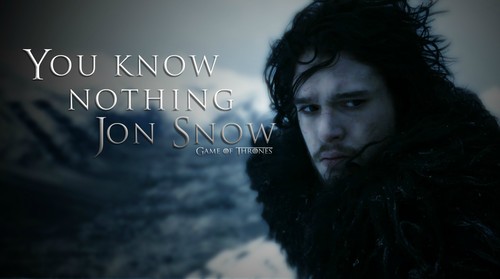
7. You know nothing John Snow!

Fans of Game of Thrones and those raised in African households will know what I am talking about. The formulation is simple: as an African child growing up in an African household any complaints on why things were as they were would be met with the phrase: "ah, you know nothing shame. When I was growing up..."

Complaints about why we had to take the bus to school when the other children had cars: "you know nothing, when I was growing up we used to walk ten kilometres to school and we would arrive fresh and ready to learn." 

Complaints about why ZESA was gone: "ah when I was growing up, we had candles and gas lights to study with and when night fell it was time to sleep vele. If only you knew."

Complaints about being bored and having nothing to do: "hehe if only you knew. When I was a boy I would be woken before dawn to go and herd the cattle and only be back home after the sun had set. Children of today shame!"

Complaints about going to the rural areas for holiday: "you know nothing you child of the City. This is where I grew up. This was my home"

Looking back I really do realise that I really did not know anything.

(c) HBO


6. Family comes first

Without going too deeply into the drama that is family (my mothers family is Sotho and they speak Sotho which I don't understand, my fathers is Ndebele but they all speak Shona and that's just touching the surface), there was one thing that came as naturally as breathing. It was a rule that was hardly spoken, it just was. Just as it is in Game of Thrones (forgive me, I am a geek and therefore a superfan), family is everything. My parents once lived in Europe before I was born and they told me about siblings who would book appointments before seeing each other and that would be once or twice a year (this apparently was Sweden in the eighties). To illustrate how different things were in my African household, we once drove to Gwanda where my aunt lived when I was around six or seven. There I met my cousin who was a year younger than me. When it was time to leave, I calmly told my parents that they could leave without me, I would take the bus and follow on Monday morning. And that is exactly what I did.

No invitations necessary, no deadlines or schedules to work around. I would spend weeks in Harare at my cousins, a month at my aunts in Beit-bridge and weekends with cousins in Bulawayo on the spur of the moment. Because that is what families do.

Family. Duty. Honour
(c) HBO


5. Gratitude is not optional

My name, Bongani, literally is an instruction to 'give thanks'. One does not just walk into an African household and eat food then rub ones belly in satisfaction. One claps their hands in gratitude and lists the clan names of the house before thanking them from the bottom of their hearts. And that is that.

One of the best stories from my cousins was when they ate then sat to watch TV as if nothing had happened. Their mother, my aunt, quietly gathered the plates went to the kitchen and cooked a fresh pot of sadza and stew and served them again. When she registered their apparent dismay she innocently mocked, "I didn't hear a thank you so I assumed you were still hungry. Now finish those plates." 


4. When we buy new things one does not remove the plastic cover until it is torn and begging to be removed

We all know the TV remote that stayed wrapped in its plastic until it had holes. And in an age where we all now regularly buy smartphones with the processing capabilities of a 1980's supercomputer then replace them when the screen cracks, this is just a beautiful extension of rule number 9. And an application of rule 7. We know nothing.


3. Friends should be chosen carefully

I would like to think I was not the only one who was subjected to a full FBI interrogation when I asked that a friend come and sleep over. Who are his parents? How long have you known this person? Where does he live? But of course once they met my friends they would be granted the seal of approval and our home was theirs.

I only came to understand why when I was leaving for Algeria. My mother, a woman I had never been apart from for more than three months at a time gave me this parting piece of advice: "choose your friends wisely. They will be many acquaintances in life and you can afford to have bad ones but one thing you cannot afford is a bad friend." 

Now, looking back, regret says; if only I had understood exactly what she meant.


2. I am because we are

In Ndebele we have a saying, umuntu ngumuntu ngabantu. It is part of the concept of Ubuntu. (And no, white people, it is not Ubhuntu, it is Ubuntu) Simply put it means 'a person Is because of other people.' Notice the capital 'I' in 'is', that again is not a typo: our raison d'être (the French have a beautiful way of expressing that capital I: raison d'être; the sole or ultimate purpose of something or someone) is not for ourselves but to change the world around us and to serve those around us. In some households it would be expressed as don't waste food, children are dying in that country I don't want to name whilst you are busy here wasting food. Certainly that was true in mine as well. But it was also in the small things, stubbing your toe and squealing with pain and everyone around you says sorry. In Europe when I say sorry to a friend who has hurt himself, they laugh at me and say but it wasn't your fault. Yes, I know but I feel your pain.

I Am because you are. It was being reminded to do whatever one could do for those less fortunate than oneself. It was weekends spent at a children's shelter with my Dad, watching my mother give her time and effort to whatever cause she felt could help. And slowly learning that I could do the same.


1. This is not a democracy, it is a constitutional monarchy

I remember watching some America reality show and seeing the children swearing at their parents. And when I say swearing, I mean screaming 'fuck you' at their mother. For those who were raised in African households this needs no further explanation. For those who were not, let me just say a little demon whispered in my mind, imagine that happening to you and the rest of my mind revolted in horror. Because we all know what is like in an African household (if you still don't know refer to rule 10). And we all know that any bambini unfortunate enough to whisper back at an African parent will know that day what is is like to visit hell.

"I'm beating you and you are crying? Hahaha manje you will know what it's like to cry."

[Five minutes later]

"I'm beating you and you are silent? You are a man now? Let's see who is the older one today!"


Zeroth Rule. There is nothing an African Household will not do for its own

This is an extension to rule 6. But more specifically aimed at the household rather than the extended family. In Ndebele we have a saying, indlovu ayisindwa ngumboko wayo.

Literally put, an elephant is not weighed down by its trunk.

Simply put: there is nothing I would not do for them.

And there is nothing they haven't done for me. 


27 February 2015

And Then The King Fell

"Gogo tell me a story", Mandla piped up in the failing light. His voice piercing through the gathering darkness with all the innocence and insistence that only a seven year old has.

Gogo stirred from whatever depths of thought her mind had descended to. For a moment she seemed as if she hadn't heard the question, her face expressionless, a calm sea upon which a wave of laughter burst. She cackled for so long even Mandla began to worry that finally Gogo had finally lost the last of her wits as mama said she would. Mama did not really like this Gogo that much, Mama liked the Gogo who was her mother and not this one who was Baba's mother and spent her days wrapped in her silent thoughts. 

"You want a story do you?" Her voice was strong but breathy. The question hung in the air for a moment before she went on. "You want a story and I will tell you one, I will tell you a story of a King, powerful and royal. A King who mounted the world and thought the Sun revolved around his balls".
Mandla giggled, he liked it when Gogo was in this mood, he knew the story would be good. He stood up and went to snuggle against her, his eyes closed and very soon his whole world was Gogo's voice. Gogo's powerful voice weaving its threads through the darkness. 

"Once long ago, long long ago back when the stones were still soft and snakes had legs; long ago when Elephant's nose had not yet been stretched by Baboon and Cheetah had not painted with spots by Hare. Long ago in this very land lived a powerful King who ruled his country with a stone fist. His people were the saddest in the land and yet their lands overflew with maize and their rivers with gold. They could not speak because the King did not like anyone but himself to speak, for he thought his voice was the most amazing thing in the world. They could not think for the King felt that only his mind held anything of interest. And while his family were the fattest in the whole grasslands, their skin soft like that of the plum in summer and their hair black and shiny like the inside of a Mamba's mouth; his people starved, their stick-like figures standing like praying mantis' in the harsh glare of the light of day.

"while his family were the fattest in the whole grasslands..."

People came from far and wide to this land to trade gold with this King, and precious stones and maize. They came from the Northern lands where the sun shines all day and rests only for an hour before rising again. They came from the East where the jungles are so deep and dense demons live in the darkest corners of that land. They came from the West where they worship fish yet eat them more than anything else. They came to trade and the King and his family grew fatter and richer than all the lands that had come before and all the lands that were to come after. Or so they thought."

Here Gogo paused. The Sun had now set and the smokey interior of the hut was now completely dark. But she didn't motion to Mandla to look for the candles so he stayed snug and calm in her embrace.

"No one knew how it happened but those who served the King became blinded by his wealth. Perhpaps it was the sight of the gold that dripped from his body, or perhaps they were blinded by the gleaming rolls of fat that rolled off his fat belly. Some say it was the witches of the West who had been bribed by the King's diamonds who bewitched them but soon the entire land was bewitched."

Gogo's voice grew dark and heavy, punctuating the hut, reverberating against the mud walls and making Mandla grip tighter into her shawl.

"They grew crazy, worshipping the ground he walked on. What little food the people had, they gave to the already fat King to celebrate the day of his birth. One time in the middle of a drought, they slaughtered so many cows and goats, the waters of the River Nkawe turned red for seven full days and seven full nights. Even as the people slept under stars for lack of homes, the King built more and houses for him and his Family. While his people walked, the King used the gold of the land to buy horses from the strange lands of the North. While the children of the people went to sleep hungry, the King used the silver of the land to buy fish from the lands of the West; smoked fish, spiced fish, dried fish, fish aged for centuries in the ageless storerooms of the Western people and whose taste is said to be unrivalled by anything under the sun. Whenever he spoke, his Royal Servers would drop to the ground and thank the heavens for having been blessed with such Knowledge. Whenever he would deign to look at one of them they would freeze, afraid of upsetting the balance of the Universe if they made one wrong move in his presence. Very soon they began to call him not only their King but also their God". 

Gogo spat out that last word with such vehemence she began coughing. Her rough heaves felt painful to Mandla but he sensed a deeper pain in her. He clutched tighter to her side, afraid the King would materialise in the hut and bewitch him into thinking of him as a God. Gogo was silent for so long, Mandla feared she had fallen asleep. 
"What happened next Gogo?", his voice was now plaintive, "what happened to all of them". 

To Be Continued....


17 November 2014

Zimbabwe's Lost Generation by ChrisNqoe

"Courage sometimes skips a generation."
I've written on the state of local youths before but I'm not sure I've ever been in such a disillusioned state or projected the anger and fear that harbours in the collective minds of Zimbabwe's born free
generation. For many fellow youths, born some years into Zimbabwe's independence, we inherited a country whose worst years were behind it. The liberation struggle, sanctions, threat of Civil war, international isolation, genocidal massacres and an uncertain future.

Like millions of young Zimbabweans born after 1980, we came into a hopeful world, a functioning country and a nation with potential to be one of Africa's success stories. In 1990, Zimbabwe had one of Africa's most impressive statistics, one of the world's best education policies with an economy that was the envy of many developing countries.

"Millions of young Zimbabweans...came into a hopeful world"
(GFDL Licence)
That story has been told so many times, exhausted beyond measure and exploited as the tale of how much could go wrong in so little time.

I'm not interested in telling the politics of Zimbabwe. I'm concerned about who'll tell the story of a generation of young Zimbabweans who have watched their country collapse, get plundered and destroyed by a generation of leaders who, ironically, were brave enough to go to war for it.

It might not all be doom and gloom for Zimbabwe's youth, many have transitioned through the academic cycle, graduated out of Zimbabwe's celebrated education system, in local and foreign universities. And then, began confronting the struggles of the real world. A world we were promised would accept us with all our qualifications and lack of experience. Or so we thought.

The reality of Zimbabwe is one were there's an entire generation that refuses to pass on chances to younger minds with fresher, radical and more relevant ideas. The problem Zimbabwe faces is not political. It's generational. It's a reluctance to accept natural change and advancement of ideas over the stagnancy of old systems.  It's a rigidity of perceptions and a stubborn refusal to accept the stale
nature of old school ideas that no longer fit into the globalised world we live in.

In the fields of politics, public administration, corporate world and ordinary life, willingness for innovation and adoption of new ideas is what determines the success of entities.

Perhaps it's time for our generation to take charge of its own destiny. Like the young men and women who felt compelled to take up arms and fight for their country's liberation. The moment is ours now, to channel our activism against old political systems into creating a new, reliable, youthful presence on the upper rungs of politics. Our country needs us.

The current system is simply not working for young people and the signs are there. We may be a demographic that was not inhibited by the racial inequalities that our parents faced. But, we must really be concerned that we are a generation that will be poorer than our parents. This is a reality we have to face.

A lack of jobs and financial difficulties are something most of us have in common. Many educated young people are leaving university with no prospect of a stable job, guarantee of employment or likelihood of financial independence.

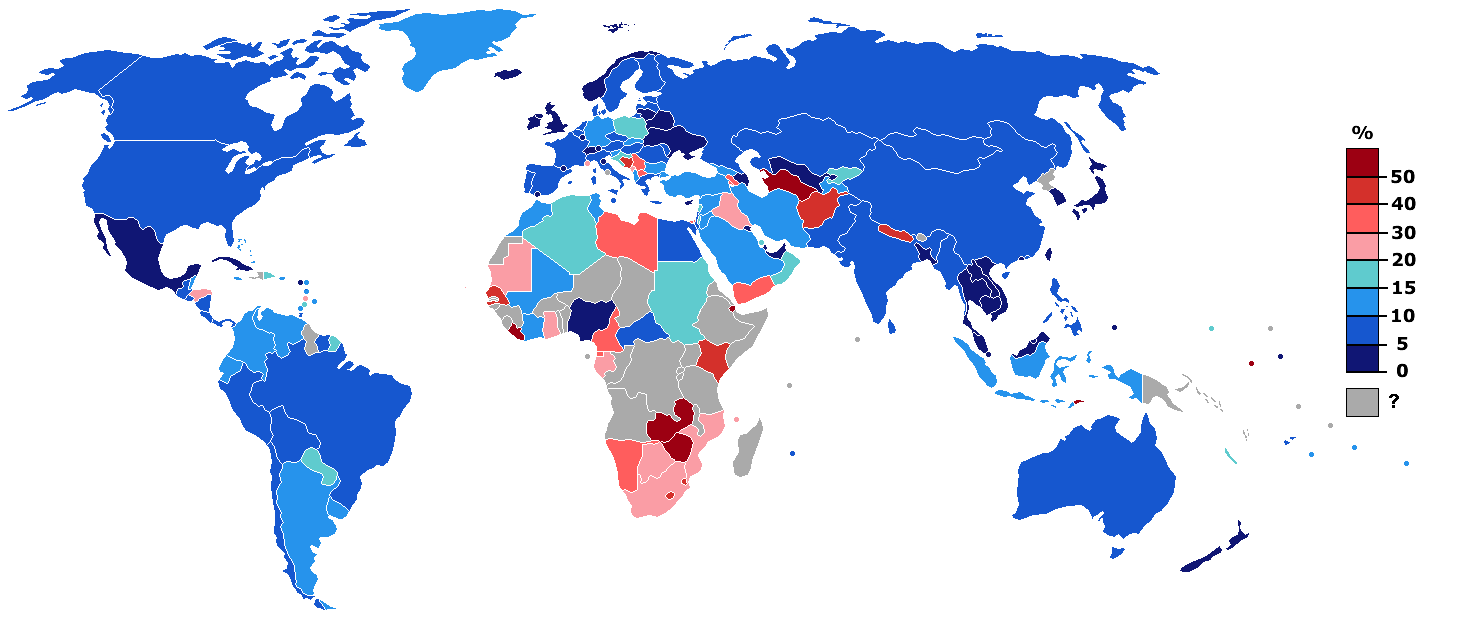
Unemployment rates in Zimbabwe are amongst the highest in the world.
Central Intelligence Agency data (GNU Licence)

There exist sad common factors amongst young Zimbabweans. A lingering feeling of disenfranchisement because our government systems are not properly listening to our problems and the solutions we are offering. Young people are not being given a chance to lead. However, the answer to Zimbabwe's lack of growth, in so many ways, is found in its reluctance to allow youth led innovation.

The older generation feels threatened by young millenials; this is a sad but true indictment. In discussions with my peers, there is a similar frustration, we are not being given a chance to effect change, and this is not referring to Zimbabwe's troubled politics.

None of us sees the world in guarantees, our parents told us to work hard and we would be rewarded with success. Our current state tells otherwise.  We are a generation that's stagnant, unable to grow up. We don't have jobs or own homes. We have young educated job-seekers who rely on their parents for financial support, most of us stay at home because we can't afford to move out and pay rent.

Youth unemployment is a daily reality for millions and Alcoholism is a deadly animal that's consuming thousands of young Zimbabweans. Hopelessness is trait that's become second nature for many. But unlike the generations before us, we have few options. We cannot go to war. We can’t fly abroad. Jumping the border is not a choice. It's tougher out there. Zimbabwe is our option, but a collective effort is required to make it liveable for young people.

What solutions do we offer?  We need economic and social policies that are youth friendly and focused. Just as there exist government measures that protect Pensioners, Civil Servants and War Vets. Let young people come up with these solutions. Employ young people. Lower the retirement age. Enforce paid internships. Introduce learner ships and invest more funding to vocational education. Give funding, resources and support to youth led business ideas. Don't simply give
us money, train young people to be good wealth managers. Zimbabwe has millions of young people with educational qualifications, ideas, energy and patriotism. Take advantage of this.

Who am I speaking to? To you, the older generation. To all of you who were born in Rhodesia. Yes, you endured the hardships of colonial rule, but young people cannot be paying you forever. You took back your country, liberated your people, benefited from land reform and nationalised our country's natural resources. Is that not enough?

Give young people a chance.

A Hopeless Dawn - Frank Bramley 1888
(Creative Commons 2.0 Licence)
Passionate about Law & Media, Chris Dube is a disillusioned young Zimbabwean.
Follow him on Twitter: @ChrisNqoe

24 October 2014

Dr Amai vs Dr Amai

Sometimes satire is the only way to deal with a reality so convoluted it makes your head spin.


All hail Dr Amai, Grace of the house Mugabe, Khaleesi of the Great Dairy Farm, Crusher of Mazowe, Queen of the Highlands and the Doctorates and the First Men, Prophetess of the Mountains, Breaker of Chains, the Soon to Be Burnt, Defender of Virginity, and Mother of Dragon purses made in China. 


When presidential politics starts resembling the reruns of a low budget 80's series that was taken off air because the network executives thought the storyline was too unbelievable.


When Julius Malema starts looking as if he is a graduate of Havard Law School compared to the mad rantings of a certain recently minted PhD graduate. 


Maybe this is all a dream. Maybe I will wake up and find out this all never happened. That they didn't take away my knighthood and my appointment for tea on the lawns of Buckingham Palace with Lizzie Dear was never cancelled. I'll wake and up Mandela will still be my bestie who calls me every night before I go to sleep and maybe Grace will still be typing away in her office and not in my bed.


Be sure they are all watching us and laughing their lungs out. Phoning each other at all hours of the night to read the headlines and laugh some more. The NSA probably has a live feed of her SMS's and her email inbox by now. And even they are laughing.


Meanwhile those who fought with all their strength and breath and sinew, those who gave their lives so that Africans might hold their hands up high in the world. Those whose every breath brought quiet dignity to Africanness, those whose very heart beat in rhythm with Ubuntu; meanwhile they turn in their graves and wonder what it is all going to become.

"When two elephants fight, it is the grass that suffers". - African proverb

27 April 2014

Dear Mr Big Man aka Morgan Tsvangirai

Dear Mr Tsvangirai

Let me set the scene for you. It's 5am where I am and I am supposed to be sleeping but here I am sitting at my desk thinking about you. Please disabuse yourself of the notion, I am not thinking of you in that way, God forbid. No I am thinking about you in a more banal and more realistic way especially now that I read you have been suspended from your own party. I am thinking of all your successes and failures. Especially the failures. Yes, to be quite honest, I am having a very difficult time coming up with the successes.

Let us see dear Sir, let us count them off one by one. You founded Zimbabwe's biggest opposition party and for what seemed like the first time it had ever happened, you stood up to Robert Mugabe and his party, ZANU PF. I remember the strikes, the protests and the stayaways you organised in those forgotten years of Zimbabwe's history, that autumn before the winter that would find us holding the remnants of a country. But how were we to know back then that the dollar would collapse, that we would wind up in queues queuing for our own currency, for sugar, for bread, for water, for dignity. Yes, perhaps in that autumn of our country you were the only one who could see that far ahead. You led, you protested, you told us to vote for you and those few that saw your vision voted with you for what you said would be change and a brighter future.

Change did not come.

Through no fault of your own Mr Tsvangirai. Understand this, we saw you beaten, we saw you holding your bloody head in front of the camera's. We read about your MP's who would be dragged out of their homes in the middle of the night only for their remains to be found days or months later. Or never found at all. We saw the offices of the Daily News bombed and then closed down, we read about your offices being raided and we saw the horrors you went through Mr Tsvangirai. How could we fault you? You more than anyone knows what it is like to sit within the walls of a Harare jail for having spoken truth to power. But already the tendrils of your downfall were planted back then. You see Mr Tsvangirai, people saw you as a plaything of the West, a puppet and not your own man. You know how hard it is to convince Nationalists in any country and any era to see beyond the borders of their country.


Even then there were whispers that you were not that clever a man, that your deputies fought with you and more. But we were entranced bythe image of our country go up in flames like rabbits caught in the headlights of a car hurtling at it. Some of us left. Some of us stayed. You stayed and you vowed to fight. And you fought.

And change did not come.

By then things got worse Mr Tsvangirai. Your own party had split into two distinct pieces, ostensibly over the issue of contesting the Senate elections at the time but there were whispers of tribalism and authoritarianism. You failed there. You failed to provide leadership in your parties greatest test against no other than itself. It would only get worse from there on. Confusion on exactly where your party was heading, your own leaders who seemed at times to contradict themselves, and just the general malaise that somehow Robert Mugabe seemed the more skillful statesman all 'other things' discounted. Even Ambassador Dell in his email to Barack Obama, which Wikileaks so helpfully provided the world with access to, described you as:
Tsvangarai is also a flawed figure, not readily open to advice, indecisive and with questionable judgment in selecting those around him
He ended his scathing analysis with the summation: "Zimbabwe needs him, but should not rely on his executive abilities to lead the country's recovery." You laughed it off but as The Guardian put it, those  "... cables were written by Americans, to be read by Americans and they form the undigested raw material of American policy." What should our policy have been then as we saw you raise your clenched fist for us to follow?

Then change almost came.

The 2008 elections failed to follow the normal course of elections. People vote. One person wins. One person loses. In our case, people voted and you and Robert Mugabe for all intents and purposes won and became the strange bedfellows that was ingloriously referred to as the Government of National Unity, though united you were not and governing was a side hobby to your principal pastime: fighting. Much has been written on how you could have handled an impossible situation better and I will not rehash it or even pretend how it must have been to work in a partnership with a partner who made every effort to pretend you were a nuisance that would go away if they closed their eyes and pretended hard that you did not exist.

But I will note that you spent those crucial years criss crossing the globe, meeting world leaders and making speeches from the podiums that stand at the centre stage of global politics. Unfortunately Mr Tsvangirai those podiums did not stand at the centre of Zimbabwean politics. You left a fractured party at home which you seem to have never tried to heal. You left voters to themselves and off you went on taxpayers money to beg for more money. You also spent those years embroiled in one scandal after the next. Someone was pregnant by you, another claimed to have married you and there were rumours of yet others. If you do not have the panache of the French, where Holland can be photographed on a scooter on the way from a night of pleasure with his mistress and still not only survive politically but be admired, I would have advised you to keep your laundry clean. Nothing riles a good Anglophone like the stench of a scandal in a politicians bedroom. Just ask Bill Clinton.


And there was more Mr Tsvangirai; the mansion, the perks, the money and grandstanding over what I called a flawed constitutional process. Mr Dell's words seemed to have become prophetic; you had become an albatross around our necks and as I listened to Freshlyground's Big Man, I thought of you: "Wear fancy clothes, drive big expensive cars...You do for you, just what you want to do.What's the solution? Material pollution!" Those suits fitted you quite well Mr Tsvangirai but perhaps they fitted you too well. No longer did we see the man who had raised his fist to the heavens in fury and promised change to the masses. No longer did we see any change at all. Instead we saw more of the same. A party riveted by fighting, an opposition that failed to present a united front in any sense of the word, we saw and heard fights between yourself and your deputies and we wept. How could you unite a polarized country when you failed to unite your own party? Perhaps when you met Angela Merkel you should have asked her how she united the opposition in Germany and swept into power. And perhaps asked her why she still refused to live in the Chancellors residence but remained in her modest home. There is power in symbols Mr Tsvangirai. You seem to have missed all the lessons.

Then change finally came.

But it wasn't the change you had promised Mr Tsvangirai. It was a change back to the way things were. A change that saw Robert Mugabe tell Grace to start redecorating because they were not moving out of State House any time soon. You lost the elections. Again. And those who had voted for you wept. And those who had believe in your promises wept. And those who had listened to you turned to you and preached to you what you had preached to us for so long and so consistently.

Change.

And you refused. You dug in your heels and refused. You blamed everyone from heaven's gate to the foundations of hell. Everyone except yourself. There was some brouhaha where people were beaten up in your party's headquarters. Yet more brouhaha saw those people suspended from your party for asking for a change in leadership. It has been a remarkable and spectacular failure of leadership Mr Tsvangirai. You failed to unite your party. You failed to lead it. And now that it was breaking apart you stood and looked surprised. Unfortunately Mr Tsvangirai, we are not. How can we trust you to lead us through the finer points of our country's great constitution when you seem not be able to agree on the broader points of your own party's constitution? What is change if it is not what you act? What is wisdom if you fail to learn tomorrow from today. What is leadership if you have failed to lead.

Bigger men have resigned over smaller things. Germany's President resigned over using his credit card while on holiday. What action do you propose for wasting the political capital you had gained and using it to beat Mr Mangoma to a bloody pulp? Bigger men have resigned over things distantly related to them. South Korea's Prime Minister today resigned over the ferry disaster that claimed the lives of at least 187 people. What action do you propose for drowning the dreams of millions of people Mr Tsvangirai?

Nelson Mandela stepped down to let those who followed him to continue his struggle for him. Mr Tsvangirai, follow his footsteps, gigantic though they must be for you. Resign and let us finally see the change you have promised to us for the better part of two decades.

Africa needs Great Men not Big Men.

Yours,

Bongani Ncube-Zikhali
A concerned Zimbabwean citizen


21 April 2014

Happy Harare, Zimbabwe

If a picture says more than a thousand words, how many words does a video express?

Love, love, love simply love this video!

I am happy!


For the back story on the video click here

11 September 2013

The Tino Katsande Sex Tape : Throw The First Stone

Let me first start by saying I don't think sex tapes are a good idea. Before you get all hot and bothered, no I do not have one this is simply from my vantage point as a Computer Scientist where we have the mantra when it comes to personal privacy: digital is forever. Recording some things should be one of those decisions you take after a long and considered think about it, especially recording and then storing the said recording on a phone. Next time Tino, please come to me and I will show you a few encryption techniques which will keep your sensitive documents away from the blaring headlines of tabloids. Or better yet just buy the new iPhone 5S which comes with a fingerprint scanner. (Hint to my readers, I want one for Christmas!)

Second of all, as much as I hate tabloids (they are to high brow journalistic publications like the New York Times what Jackass: The Movie is to The Lord of the Rings in the land of movies) I really can't be surprised by the latest headlines screaming about Tino's Sextape. As long as people know that this sort of things sell newspapers, we will inevitably have to live with them. And keep trying to walk past their grimy headlines and lust for the baser proclivities of humanity whether it be The Sowetan in Johannesburg, the American National Enquirer in New York or the dreaded H-Metro in Harare. We hate you, but like mosquito's, we have to live with you.
What I really take exception to in this entire scenario is the reaction of many of my fellow Zimbabweans on the web. People have found the time and energy to digest this story and come up with the most amazing vitriol and musings, judgements and damning attacks, mockery and sarcastic humour of such low level depths it is positively evil. Tino has been attacked by the know it alls who claim she leaked it on purpose to get onto Big Brother, or that she just wanted something to boost her career (as if being a radio DJ on Zimbabwean National Radio was a position that needed that extra boost of prominence a sex tape would bring) or that she just loves attention. I do not know if all that is true, I admit it all could be true or contain elements of the truth but the thing here is: neither do all of you. Tino has said her phone was stolen. Period. Why not take her at her word? Why feel the need to judge her motivations and to analyse the character and motivations of a person you have never met?

And that word judge bothers me a lot here. The judgement is going around in heavy doses. The Bible bangers are taking out their dusty bibles to drum them for all who have ears to hear, the moral high grounders are sitting in their ivory towers casting judgement with their upturned noses. "Look what this Tino is doing", "This is not Zimbabwean", they cry in horrified voices. "This is not African", they say as they sweep up their skirts in outrage. The ones who have really big brushes prefer to lay the blame wide and thick, "Look at these youths of today! The horror!" Others attack her personally: "She is stupid", "What did she think would happen", and yet the last group that really gets to me even go so far as to attack the tape itself: "The tape was boring she should have done ABC in it" (I will leave ABC to your vivid imagination dear reader!)


What I want to say, is shut the fuck up! First of all, this is the Zimbabwe of today. Your children are sending such videos, your husbands are probably watching such videos. Deal with it in a constructive manner instead of denying it all as unAfrican, unZimbabwean, unwhatever-group-of-angels-you-belong-to. This is what Zimbabweans do all the time, we deny that something exists and then pretend it just happened this once and whoever did it was an abberation of nature. Well I have news for you, Tino is a Zimabwean and Zimbabweans are humans. Humans do things like making sextapes. How you choose to deal with it is another matter but don't bury your head in the sand. The H-Metro is full of stories of boys raping goats or men being found stuck to chickens. Never have I seen someone try to create an awareness campaign to try to stop it happening or try to educate people on the dangers of bestiality. Instead they snigger and laugh.

In France I have seen pamphlets made by the government (government logo and all) go into great detail about the dangers and effects of drugs like cocaine and ecstasy and the risks of unprotected sex. I have followed debates as they try to make sense of whatever latest scandal or tragedy befalls them, or simply shrug it off as just one of those things. And as the continent with 60% of the worlds' population living with HIV/AIDS compared to the highest in Europe of 1.2% in Estonia perhaps we can stop with the sniggering and realise that we are all human, we are all in this together.

Tino is just human people. She made a mistake (and when I say mistake I mean putting sensitive information on an unsecure device not making the tape itself). A mistake that seem to have cost her job and who knows what else on a personal level. She has apologised for it on Facebook to basically the whole world, even though to be quite honest it was none of our business to begin with and remains as such. So before you climb on your moral high horses and go gallopping into the sunset, give her a break! She was the victim of a crime, people should be demanding justice for her, not asking for her to be deported. And while we are at it: I would like to lay a challenge to all the puritans out there: show us the contents of your laptops, your hardrives, your Facebook inboxes and your Whatsapp messenger inboxes. If they are as clean as Pope Francis' snow white cassock, then and only then do we give you permission to speak. To paraphrase Jesus: he who has no need to put a password on their phone's inboxes, let him throw the first tweet.

I rest my case.

If you agree with me, hit the share buttons, if not, hit the comment one!


07 August 2013

We Told You So: Why MDC lost the Zimbabwean Elections

Chris Nqoe is back! Nkosinqobile Dube (Chris Nqo) is a Zimbabwean Law graduate and also the Editor in Chief of dECK Magazine in Bulawayo. He has also been a speaker at Global Changemakers workshops as well as panels such as Al-Jazeera's The Stream, Channel Zim & Zimbabwean Radio.
****

This is the point where I'd stick my tongue out and laugh till my ribs crack. Doing all that and still managing to utter the words: "I told you so".

I would be shouting those words at the top of my voice. That's if the fate of an entire country did not depend on this electoral outcome. I'd be saying that too, if the hopes, plans and dreams of millions of Zimbabweans had not been dashed by the X's of just under 3.4 million of their countrymen
But what exactly did me, Bongani and a few other analysts tell you would happen or not happen? We told you to Vote No to the draft constitution.[Click here for Chris' guest blog & here for mine].

That it was an imperfect compromise that would return to haunt Zimbabwe. And on the first days of howling, cold and bitter August, those words returned to haunt our lives.

My kindergarten self is again tempted to return to the What If mode. What if Zimbabwe had heeded the call of progressive minds and voted No? What if Zimbabweans had shown that the will of the people need not be predetermined by the positions set by political parties? What If Zimbabweans, for once in their independent lifetime took charge of their fate and demanded what they really want?

What if, what if, what if? What if we didn't answer the above questions? And instead focused on what next?
So many questions. However, in order for us to plan ahead, we need to understand where we got it wrong. For my fellow countrymen, the reality is starting to dawn on them, the future is uncertain. You see, in politics, there always has to be a plan. With a plan there must be an end goal and to get there requires strategy. Good strategy.

Now, let's look at the present state of affairs in Zimbabwe, who appears to have had a good plan and the perfect strategy to achieve their goal?

Yes, you're with me. Let's all say this at once: ZANU-PF.

And it all began in December 2012 at the ZanuPF Congress. They started planning. Frustrated by the constant checks and balances from their partners in the GNU, the revolutionary party decided they had had enough. The GNU was always going to conclude and elections would be held.

The first point in the ZanuPF plan was to achieve the seemingly impossible. Register one million new voters. The analysts laughed it off, their parties in the GNU gave it scant attention. ZanuPF got to work.
From January 2013 they have been working at mobilising their structures for Voter Registration, the referendum & subsequently, elections. The end goal was elections. As you read this you're aware of the Zimbabwe Election results of the year 2013. [Editors’ Note, if you are not, check out their Wikipedia page here]

Let's say it all again, who won? ZanuPF!

Alas I have jumped the gun. For all this to have taken place, so many processes had to kick it off.
Zimbabwe went to a referendum in March, at the behest of the major parties in the GNU. They had come up with a document, in which they all called for Zimbabwe to endorse. The COPAC Draft Constitution went to a popular referendum and was voted for overwhelmingly. I called the Draft Constitution a risky compromise, in thisblog post. Laid down the principles on why Zimbabwe should #VoteNo.

But we were lone voices in the wilderness of Yes choruses. Legal scholars, NGO's, Political analysts, the MDC-T, ZANU-PF and MDC-N all called upon Zimbabweans to #VoteYes. The MDC's all called for a vote Yes anticipating a victory in the upcoming elections, basing it on blind hope and belief that Zimbabwean would vote out ZANU-PF. ZANU-PF called for a Yes vote to get rid of the GNU and win the elections based on a popular mandate.

Perhaps what is most striking in August 2013 is how all the above players, are now singing from different hymn books. The discord is humorous for us, the so called progressive minds.
The conductor of this choir is now ZANU-PF. The pitch of voices has shifted. Whereas back in March they were heralding the dawn of a new era, with a New Constitution, the mood is one of sombre realisation. "We were cheated".


ZANU-PF is enjoying the chorus of discontent. For them, the pieces have all fallen into place.
No. You were not cheated. You cheated yourselves. You went into a game, without a strategy and without a plan. ZanuPF had one. Get more people to register to vote, #VoteYes for the Draft Constitution so as to end this power sharing agreement, call for elections and mobilise people to vote overwhelmingly for us. This has all been achieved. Perfectly so. It was all part of the bigger plan to get back into total control. ZANU-PF got here by getting the MDC's to endorse their own demise.

What if Zimbabwe had voted No? What if the new constitution had been rejected by progressive Zimbabweans who saw the bigger picture? What if we had all realised that by being told to Vote Yes, we were endorsing the beginning of the end?

What if that realisation can't help us now?

Zimbabweans Voted Yes to the new constitution because the dominant political parties told them to vote Yes. We did not bother to question the motive, ideals and principles behind this supreme law.
Fast forward to August 2013. The signs point to a ZANU-PF victory, the political party that called on Zimbabweans to endorse the unity shown by its partners in the GNU and Vote Yes. On the dawn of their victory, whispers have emerged that they are itching to correct the mistake of the New Constitution.

In simple terms ZANU-PF first goal in parliament and in power will be to amend the Constitution they endorsed.

What if we had put a bump to the constitution, allowed more time for fair voter registration, for a voters roll audit and to go into fair elections prepared? What if we had voted No? Followed our collective conscience as Zimbabweans, knowing what's best for our country and safe guarding the pillars of democracy.

What if we had known that politicians look after their interests first? Interrogated why they wanted us to Vote Yes to a draft constitution that did not reflect the true will of Zimbabweans.

We never did all those things. Like the MDC's we followed the ZANU-PF lead and were blindly led to a bleak and uncertain future. All because we never questioned and realised that power lay in us Zimbabweans saying No.


But again, we told you so. What if you had listened?


Follow @ChrisNqoe on Twitter

17 July 2013

I Am Trayvon Martin

An African American student who is a friend of a friend of mine wrote on his Facebook wall that he was shocked by the Trayvon Martin verdict (see my previous blog here). Someone responded:
"Don't take this to heart. You are a very smart, very talented, handsome guy, don't let yourself be dragged into this mentality. You are not going to be shot- you carry yourself well, speak well, walk and dress well. Martin was not killed because of the color of his skin, he was killed because he got into a very violent altercation with an armed man...Martin, RIP, had pictures of marihuana (sic) in his cellphone, texts about buying a gun illegally, and lots of racist profanity against white Americans. This was not about race. I'm telling you because you are new to this country and while its true that there is racism out there, this case wasn't it....You're a smart, educated, good looking guy. Believe me, you're not Martin."
There is something fundamentally sad, something fundamentally wrong about this. Something that struck me to the core with an anger that felt almost powerless against such passive discrimination. It is a discrimination so silent, so cloaked in politeness you almost get hoodwinked by its seeming logic and tell yourself that all is well. But then the questions hits you: are people who carry images of marijuana in their phones supposed to be shot? Should we be shot for the content of our Whatsapp messages? Once those questions start coming in, the floodgates open: am I supposed to be safe because of the way I dress? If I dress like a "thug", should I be shot on sight? Is what a wear, an indicator of who I am? Are the lives of those who buy their clothes from Fifth Avenue in New York, Sandton City in Johannesburg or Sam Levy Village in Harare more valuable than those whose clothes are from the corner thrift shop?


"You are not going to be shot - you carry yourself well, speak well, walk and dress well...." Whites can carry and talk whichever way they want to but if a black person carries himself well, then he is safe. What does this imply for those who don't? Let's not fool ourselves. This is about race. This is about discrimination, about the snap judgements of those who see the world as simply black and white, good and bad, they who subscribe to Cersei Lannister's motto: "Everyone who isn't us is an enemy". Certainly George Zimmerman revealed as much in his call to Emergency Services, "...they always get away", he complained. Who is 'they' we might ask?

I talk well. I like to think I dress well and I carry myself well. I learn at one of Europe's best schools, so supposedly I am safe right? Wrong. I have been a Trayvon Martin so many times it hurts. In Algeria where I would be the only one made to get off the bus and unpack my baggage to be inspected at police roadblocks. One officer went so far as to taste my toothpaste. The fact that I was the only black on the bus does not seem that much of a coincidence. In university where my professors would call me "l'africain" instead of ever trying to learn my proper name.

In Germany where I was the only black on a flight filled with Europeans and Arabs, where I was pulled out of the queue at boarding and put in a little room and interrogated, my hand luggage searched, my laptop scanned and my passport stamps and visa's examined in great detail.

In South Africa where I was helping my cousin shop for her wedding dress and the white owners of the shop completely ignored us for twenty minutes but went running to a white couple who had just come in to ask the price of a necklace. At the South African Post Office where the white manager told me I was "a problem" and that I should go back home instead of trying to open a bank account with my "fake" passport.

But closest to home, the day I was approached by one of our white neighbours who lived in the complex where my parents live. In all my innocence, dressed well, speaking well, carrying myself well, she approached me and asked me what I was looking for there. Who cares that I had unlocked the gate with my security code, that I had actually had a conversation with her a few months earlier when I happened to meet her in the garden; no, no one cares. To her I was suspicious just for being there. I didn't belong there.

I didn't belong there in much the same way Trayvon Martin did not belong there that fateful evening. I looked strange for being as normal as I could possibly be, in much the same way Trayvon Martin looked strange for walking home slowly from the shops talking on his phone to his friend. I was guilty of something in much the same way Trayvon Martin was guilty of carrying images of marijuanna on his phone. Something just had to be wrong. Something just had to not click. So she came up to me and asked me what I was doing there.

We are all Trayvon Martin's. We are all judged and told we do not belong every time we walk into a shop and security starts surreptitiously following us around. Every time one of us gets shot for being afraid of the big Hispanic man following him in the dark night. Which one of us would not stand their ground? Trayvon Martin did. And George Zimmerman decided he didn't belong not only in that neighbourhood. But on this earth. And the jury agreed.

RIP Trayvon Martin.


"What is really injured, bruised, if you will, is the psyche of our national population. We are all harmed. We are all belittled, and we give to the rest of the world more ammunition to sneer at us." - Maya Angelou speaking on the Trayvon Martin verdict.


24 June 2013

From Paris With Love: The Paris Air Show 2013

One of the wonderful things about living in Paris one would think, would be the feeling of being at the centre of the world, or near enough to it that it is all the same. Love tennis? Roland Garros is a metro ride away. Love cars? The Paris Motor Show is a train ride away. Love fashion? Go to Paris Fashion Week and if you love cycling go stand on the Avenue Champs Elysée in August to see the winner of the Tour de France cycle the last few metres to victory (we all know this time it won't be Lance Armstrong so it might actually be interesting again).

But the reality is I have always been too busy to attend any of these things. I remember well the Paris Motor Show coincided with my mid-semester exams. Sometimes what you are left with is a feeling of so near and yet so far away...but not today! I got to go to the Paris Air Show!
And the funny thing is that I actually wasn't going there when I woke up that day, a cancelled appointment left me in town with nothing to do and a quick phone call to a friend who assured me the first day of the show was free for students (one knows the reputation of Ndebele's and free things) saw me making my way to Le Borget one of Paris's four airports where it was being held.


So that's how I ended up at the show where dreams take flight. And oh how did they fly! Jets were making complicated shapes in the sky with the vapour jets behind then. French army pilots did breathtaking tricks that left me wondering if they were either highly trained, high on drugs, unafraid of death or all of the above. A French military unit showed the ever appreciative crowd how to fly a helicopter with six soldiers hanging from a rope below the aircraft like fruit flailing in the wind. To say we held our breaths as we watched them high above us with nothing but a rope and the pilot's skill between them and a Youtube worthy death would be an understatement.

And the whole world was there it seemed. Every European country seemed to have a stand showing off the latest in aeronautics. The Russians had a stand where two very Russian looking pilots (all they needed was a bottle of vodka to complete the scene) were posing for pictures in front of an adoring crowd. Civilian aircraft were posed next to unmanned drones and missile launchers a sobering reminder at times of the highly profitable market that is war. But I couldn't let myself become too philosophical, awe was the most appropriate word to describe the maze of space rockets and Formula 1 racers parked within reach. For a geek like me: it was heaven!

But even in the heaven of the Greeks certain gods dominated the arena and who else could dominate an Air Show but Airbus with their magnificent Airbus A380 parked in the centre of the exhibition. "Own the sky" was splashed on its side in bright blue letters and the logos of airlines, for once, were printed in small print near the bottom of the plane. I have never been a fan of the Engineering Sciences but today I could not but be in awe of the sheer technical and scientific genius that was able to bring 300 000 kilograms of aluminium into flight. And according to French media, between them today, Airbus amd Boeing signed deals worth 130 billion Euros.

And there were the lighter moments too. The commentator on the public address system had a highly developed sense of humour not to mention his heavily French accented English translations. And the makers of the Parrot iPhone controlled drones had them doing a simply delightful aerial dance routine. I just found myself wishing as I walked away that amongst the many flags that were flying today, I could have seen an African flag. We have come a long way but we still have some way to go. Reminded me a bit of an Eskom advert I saw a years ago:

Dreams speak to the man 
The man whispers his dreams to the stars 
The stars wink back and say, 
“Come up anytime you are ready”

Our time shall come.