Pages

02 August 2015

We Are Not Lions...

I am as bewildered as the ordinary Zimbabwean as to why the death of what essentially was a big, wild cat has managed to unite the world in mourning. The excitement has risen to the extent of seeing my Twitter Timeline and Facebook homepage flooded with hashtags such as #cecilTheLion, #WalterPalmer and even, sacrilege of sacrileges, #jeSuisCecil. Demonstrations have been organised, petitions signed and Jimmy Kimmel was so moved by the events in Zimbabwe that led to Cecil’s death, that he shed tears on his show. In 24 hours alone, the hashtag #CecilTheLion racked up three quarters of a million tweets. Zimbabwean Twitter was soon alight with tweets of bewilderment and slight mirth as we watched this global display of grief over the death of one of our lions.

Honestly, shrink him a little bit and he's nothing more than a cat! A glorified cat!

The backlash was inevitable though; some Zimbabweans are now feeling slighted by the international media, who have thrust a dead lion, into the limelight ahead of what they feel are more deserving issues. Like the case of political activist Itai Dzamara who was kidnapped four months ago and is still missing or a government seemingly hell bent on digging now that the economy has reached rock bottom; issues like rocketing unemployment and an ever fragmenting ruling party facing off with a fractured opposition. But in the plethora of commentary both for and against Cecil The Lion, I find something deeply disturbing. In criticising Western Media for their focus on this story, Zimbabweans are silently overlooking our own silence on our own stories. 

Men and women on the far side of the planet have taken to their streets to protest for the rights of a lion they will never see. Yet in Zimbabwe itself, we have held our relative peace as nine thousand people have lost their jobs in two weeks according to President Robert Mugabe himself. We have looked and mocked each other on Twitter as we watched Mrs Mugabe essentially award herself a Doctorate from the country’s leading University, the #DrAmai hashtag trended for a few weeks but at the end of the day, we have let her keep her dubious degree. We watch as government bickers openly, Ministers are spied on and political parties fragment into more pieces than they are Christian churches and in all this we seem to have failed to bring as much attention to our own issues as outraged white Americans and ‘Western Media’ have bought onto the case of one dead lion.
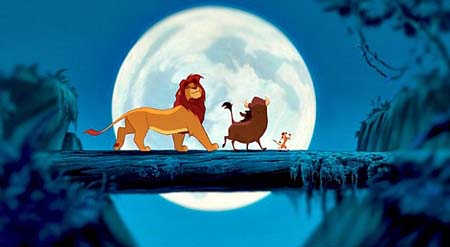
One assumes Cecil is in Lion Heaven singing Hakuna Matata....
Our voices all over social media have never been as united as they have been in this weird pro/anti Cecil The Lion universe we have been thrust into. Our willingness to analyse the legality of extraditing Dr Palmer has never been as in depth as our analysis of Doctorates falling from heaven into the laps of ruling party members.  And even when our voices have reached levels matching the current brouhaha, action has not matched Western efforts over a dead lion. In one day Jimmy Kimmel has raised USD 150 000 for Cecil The Lion. This is not to negate nor ignore the tireless voices who have spoken out over the past decade, organisations and individuals alike, who have fought for Zimbabwe. But this is to question the many who have remained silent in the face of the few who have acted and spoken, risking livelihoods, lives and limbs.

 Part of it is due to the eternal optimism of Zimbabweans, what else has taken us through hyperinflation so terrible the government could no longer fit enough zeros onto the local currency before it collapsed? What else has taken us through almost a decade of electricity cuts, water cuts, understaffed and underequipped hospitals? Where the citizens of almost any other country in Africa would have long ago declared enough to be enough, we have simply held onto the belief that tomorrow is another day and maybe, just maybe, tomorrow will bring something better with it. The rest is fear. Fear of a repressive regime that rules in a country where opposition leaders get severely assaulted by the national police, where political activists disappear, where outspoken Catholic Archbishops like Pius Ncube are silenced with nationally broadcast ‘leaked’ sex tapes. 

But in failing to address the optimism that has led us nowhere nearer to regaining the glory of our yesterday nor face the fear that has bound us to inaction, Zimbabweans are demonstrating that as much as we might cry for this lion, this alpha male who was king of Hwange National Park, we leave our story, by default to be told for us by the ‘Western Media’ and foreigners who will always care for whatever their heart chooses to care about. And in failing to stand up for our own stories, speak out with our own voices, we fail to be fearless or brave or agents of change on the broken scene of our country’s landscape. We fail to be lions. 
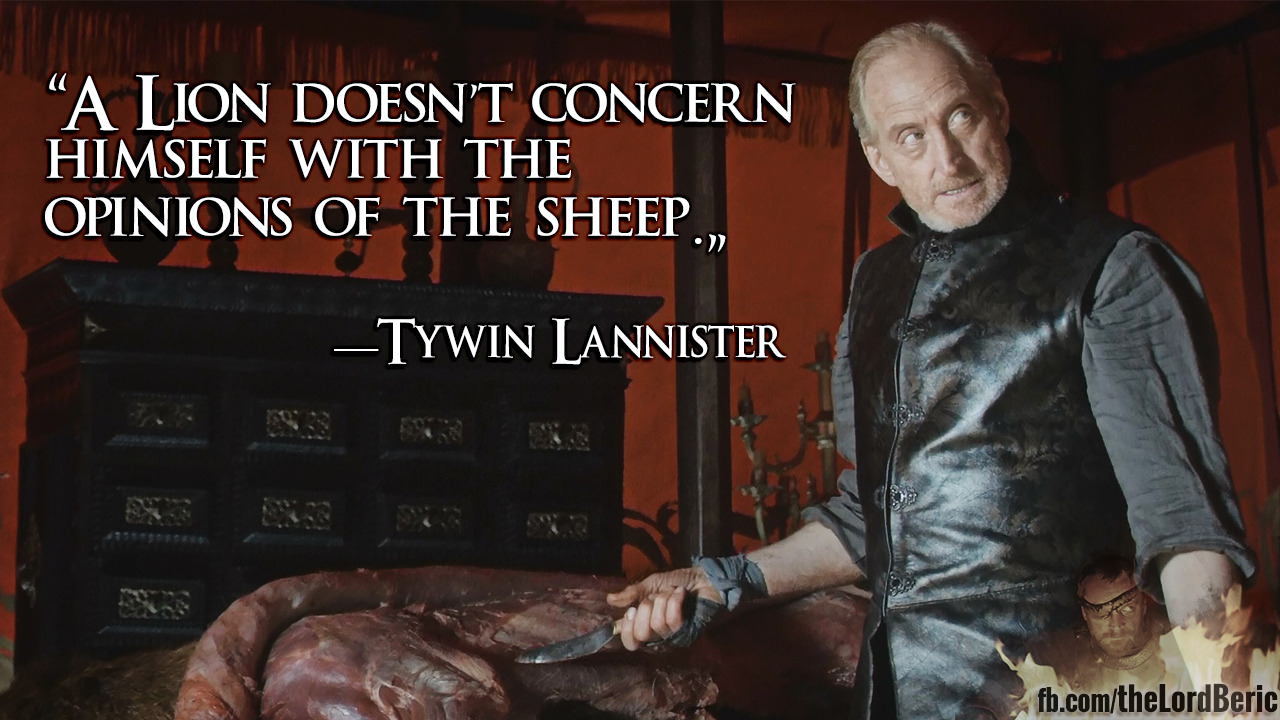
Tywin of House Lannister: A True Lion

15 March 2015

Remembering Home, Remembering You

I remember the sun peeking over the horizon as if it was scared of announcing a new day. But already the light of its glory has set the sky on fire and the day has begun. The rooster crows in agreement and I lie in bed, this feeling of deliciousness inside me. The joy at being alive, of being here, inhabiting this space, this time, being home. Outside, the dew covers the delicate fronds of grass and hangs from the rose petals, a delicate beauty dripping like diamonds from the soft pink of the buds.

I remember that beauty. Beauty of the garden I kept myself, worked every Saturday to water and mulch. I remember the stark blue of the sky in winter. Cloudless and stretching like the mind of God to the ends of the world as I lay in the grass watching it. Innocent. Guileless. Clueless. My world was limited to the borders of the city I had been born in, Bulawayo: the place of killing. I began each day as I always did; a bowl of porridge. On a good day, with a tablespoon of peanut butter and generous amounts of sugar. I never understood those who put butter in their porridge, I was always a peanut butter guy. I haven't had porridge in almost ten years.

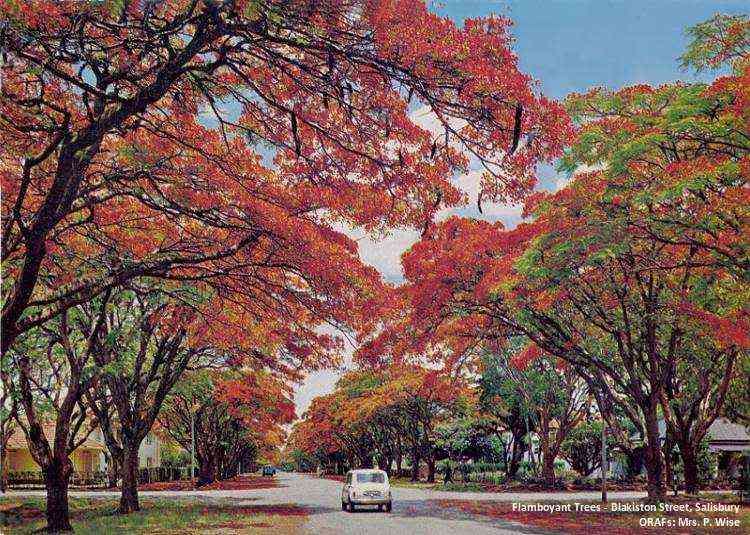
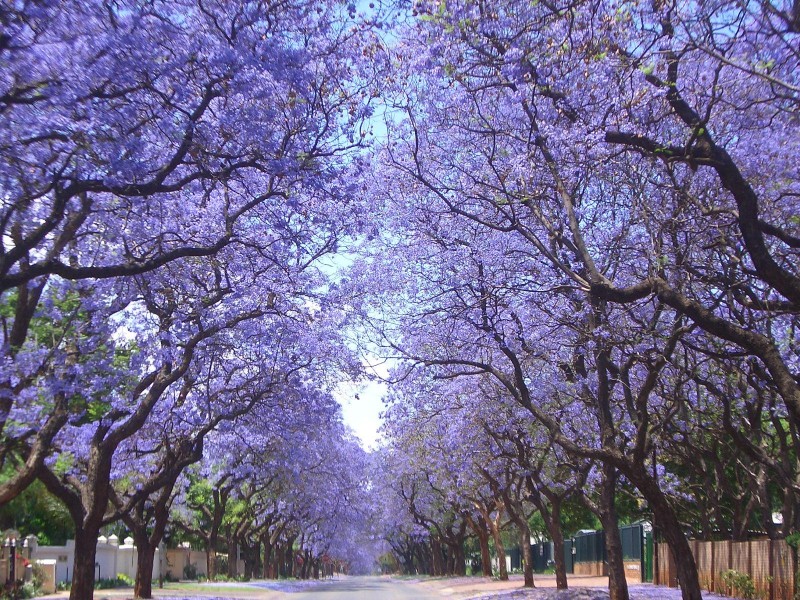
I remember the avenues of Bulawayo lined with jacaranda's in October. That is the image most tourists have in their heads, the image that a quick Google search will give to you: streets covered in a carpet of purple, drops of perfume falling from the trees to the ground where they lay waiting to be squished by the wheels of cars or your feet as you passed by on your way to the shops to buy a loaf of steaming fresh bread from the Hot Bread Shop. But an image less know about is an image of the Flamboyants that bloom in early summer and explode in a red as deep as the eyes of the setting sun. Some are isolated trees, lost amongst the crows of the Jacaranda's, but some are armies that line Cecil Avenue on it's way to meet Hillside Road, standing guard over the narrow road like loyal red sentinels watching over you as you pass by.

"Loyal red sentinels watching over you as you pass by..."
(c) Mrs P. Wise
I remember my first high school. Nestled deep in the heart of Makokoba, its green solitary field, an emerald that I told myself would one day watch as I played soccer to the applause of a cheering crowd. That never happened. Instead I lost myself in the brown face brick buildings, discovering science and literature and a world I had never imagined existed. Hard working men and women showing up every morning to make sure one thousand children each got an education that would arm them for a life in a country that was beginning its slow decline into madness. But what did I know of that? For me life was scrunching up my noise on days when the sewage in Mazaye decided to smell and waft into our Maths class as we tried to concentrate hard on these things called variables. Or the smell of incense during mass at school that made me wonder if God smelt like that; mysterious, stuffy and holy.

I remember you. Remember the force of your being, the beauty of your soul. The way we laughed all day never once thinking that it would all end. Remember the way you and I walked through the streets of that City we both called home, looking for what it was we did not know. But perhaps it was just looking for the happiness of existing in each other's world, sharing the space that Universe had loaned us, given to us and whispered softly that she would take it back one day. But we never heard her did we? We walked carelessly past the white splendour that was City Hall, sat our buttocks on the hard pavements as we waited for our kombi to go home, the squalid beauty that was the flea market with old women selling tomatoes. The freshest tomatoes in the world they said, the most beautiful, juiciest and reddest of them all: all for just two dollars. Two dollars only. I would give every dollar I had to have those days back.

I remember Christmas. No, nothing like the spectacular December lights on the Champs Elysée in Paris. Nothing fancy that sparkled in the flash of tourist camera's and makes them catch their breath. More humble, more basic; static lights stretched over Gwanda Road, all the way past the greens of Centenary Park, in the shape of a fat Santa, reindeer and spelling out Merry Christmas and a Happy New Year. Or perhaps it was one of the Christmas' I spent in the village with my gogo, the smell of the manure that was used to create the hard floor of the huts fading more and more into the background as each day passed. I regret never having milked the cows, never having carried a bucket of creamy milk to gogo milked by my own hands and waiting for her to congratulate me in Sotho, a language that I still do not understand.

"I will be lucky enough to go and live out those memories waiting to happen..."
Source: RedJBishop
It's funny no? One regrets the things one never did. I don't regret the day I froze in front of the entire school when I was supposed to give a prayer. I don't regret the friends I made who would later leave me, the days I spent carved into the hard stone of my memory that I will pass my hands over till the day I die. Instead one regrets the roads untravelled, the sights unseen, the words unsaid said to you. But perhaps one day I will be lucky enough to go and live out those memories waiting to happen. Add them to my memories of a City that calls out to me in my dreams, whispers to me in my days and says only one word, a simple word that tugs on my heart with such force I fear it will break.

Home. 

27 February 2015

And Then The King Fell

"Gogo tell me a story", Mandla piped up in the failing light. His voice piercing through the gathering darkness with all the innocence and insistence that only a seven year old has.

Gogo stirred from whatever depths of thought her mind had descended to. For a moment she seemed as if she hadn't heard the question, her face expressionless, a calm sea upon which a wave of laughter burst. She cackled for so long even Mandla began to worry that finally Gogo had finally lost the last of her wits as mama said she would. Mama did not really like this Gogo that much, Mama liked the Gogo who was her mother and not this one who was Baba's mother and spent her days wrapped in her silent thoughts. 

"You want a story do you?" Her voice was strong but breathy. The question hung in the air for a moment before she went on. "You want a story and I will tell you one, I will tell you a story of a King, powerful and royal. A King who mounted the world and thought the Sun revolved around his balls".
Mandla giggled, he liked it when Gogo was in this mood, he knew the story would be good. He stood up and went to snuggle against her, his eyes closed and very soon his whole world was Gogo's voice. Gogo's powerful voice weaving its threads through the darkness. 

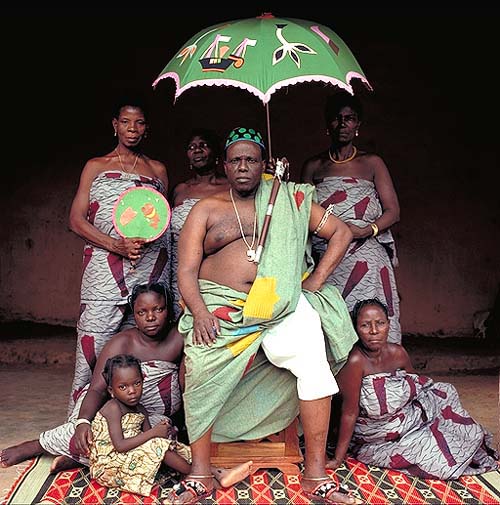
"Once long ago, long long ago back when the stones were still soft and snakes had legs; long ago when Elephant's nose had not yet been stretched by Baboon and Cheetah had not painted with spots by Hare. Long ago in this very land lived a powerful King who ruled his country with a stone fist. His people were the saddest in the land and yet their lands overflew with maize and their rivers with gold. They could not speak because the King did not like anyone but himself to speak, for he thought his voice was the most amazing thing in the world. They could not think for the King felt that only his mind held anything of interest. And while his family were the fattest in the whole grasslands, their skin soft like that of the plum in summer and their hair black and shiny like the inside of a Mamba's mouth; his people starved, their stick-like figures standing like praying mantis' in the harsh glare of the light of day.

"while his family were the fattest in the whole grasslands..."

People came from far and wide to this land to trade gold with this King, and precious stones and maize. They came from the Northern lands where the sun shines all day and rests only for an hour before rising again. They came from the East where the jungles are so deep and dense demons live in the darkest corners of that land. They came from the West where they worship fish yet eat them more than anything else. They came to trade and the King and his family grew fatter and richer than all the lands that had come before and all the lands that were to come after. Or so they thought."

Here Gogo paused. The Sun had now set and the smokey interior of the hut was now completely dark. But she didn't motion to Mandla to look for the candles so he stayed snug and calm in her embrace.

"No one knew how it happened but those who served the King became blinded by his wealth. Perhpaps it was the sight of the gold that dripped from his body, or perhaps they were blinded by the gleaming rolls of fat that rolled off his fat belly. Some say it was the witches of the West who had been bribed by the King's diamonds who bewitched them but soon the entire land was bewitched."

Gogo's voice grew dark and heavy, punctuating the hut, reverberating against the mud walls and making Mandla grip tighter into her shawl.

"They grew crazy, worshipping the ground he walked on. What little food the people had, they gave to the already fat King to celebrate the day of his birth. One time in the middle of a drought, they slaughtered so many cows and goats, the waters of the River Nkawe turned red for seven full days and seven full nights. Even as the people slept under stars for lack of homes, the King built more and houses for him and his Family. While his people walked, the King used the gold of the land to buy horses from the strange lands of the North. While the children of the people went to sleep hungry, the King used the silver of the land to buy fish from the lands of the West; smoked fish, spiced fish, dried fish, fish aged for centuries in the ageless storerooms of the Western people and whose taste is said to be unrivalled by anything under the sun. Whenever he spoke, his Royal Servers would drop to the ground and thank the heavens for having been blessed with such Knowledge. Whenever he would deign to look at one of them they would freeze, afraid of upsetting the balance of the Universe if they made one wrong move in his presence. Very soon they began to call him not only their King but also their God". 

Gogo spat out that last word with such vehemence she began coughing. Her rough heaves felt painful to Mandla but he sensed a deeper pain in her. He clutched tighter to her side, afraid the King would materialise in the hut and bewitch him into thinking of him as a God. Gogo was silent for so long, Mandla feared she had fallen asleep. 
"What happened next Gogo?", his voice was now plaintive, "what happened to all of them". 

To Be Continued....


17 November 2014

Zimbabwe's Lost Generation by ChrisNqoe

"Courage sometimes skips a generation."
I've written on the state of local youths before but I'm not sure I've ever been in such a disillusioned state or projected the anger and fear that harbours in the collective minds of Zimbabwe's born free
generation. For many fellow youths, born some years into Zimbabwe's independence, we inherited a country whose worst years were behind it. The liberation struggle, sanctions, threat of Civil war, international isolation, genocidal massacres and an uncertain future.

Like millions of young Zimbabweans born after 1980, we came into a hopeful world, a functioning country and a nation with potential to be one of Africa's success stories. In 1990, Zimbabwe had one of Africa's most impressive statistics, one of the world's best education policies with an economy that was the envy of many developing countries.

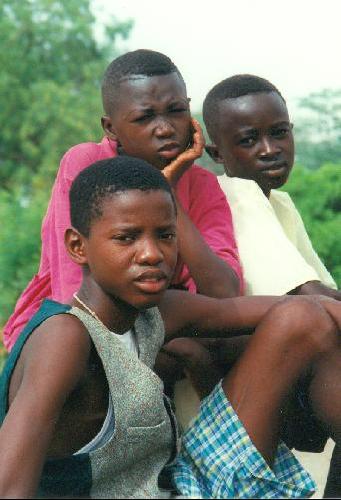
"Millions of young Zimbabweans...came into a hopeful world"
(GFDL Licence)
That story has been told so many times, exhausted beyond measure and exploited as the tale of how much could go wrong in so little time.

I'm not interested in telling the politics of Zimbabwe. I'm concerned about who'll tell the story of a generation of young Zimbabweans who have watched their country collapse, get plundered and destroyed by a generation of leaders who, ironically, were brave enough to go to war for it.

It might not all be doom and gloom for Zimbabwe's youth, many have transitioned through the academic cycle, graduated out of Zimbabwe's celebrated education system, in local and foreign universities. And then, began confronting the struggles of the real world. A world we were promised would accept us with all our qualifications and lack of experience. Or so we thought.

The reality of Zimbabwe is one were there's an entire generation that refuses to pass on chances to younger minds with fresher, radical and more relevant ideas. The problem Zimbabwe faces is not political. It's generational. It's a reluctance to accept natural change and advancement of ideas over the stagnancy of old systems.  It's a rigidity of perceptions and a stubborn refusal to accept the stale
nature of old school ideas that no longer fit into the globalised world we live in.

In the fields of politics, public administration, corporate world and ordinary life, willingness for innovation and adoption of new ideas is what determines the success of entities.

Perhaps it's time for our generation to take charge of its own destiny. Like the young men and women who felt compelled to take up arms and fight for their country's liberation. The moment is ours now, to channel our activism against old political systems into creating a new, reliable, youthful presence on the upper rungs of politics. Our country needs us.

The current system is simply not working for young people and the signs are there. We may be a demographic that was not inhibited by the racial inequalities that our parents faced. But, we must really be concerned that we are a generation that will be poorer than our parents. This is a reality we have to face.

A lack of jobs and financial difficulties are something most of us have in common. Many educated young people are leaving university with no prospect of a stable job, guarantee of employment or likelihood of financial independence.

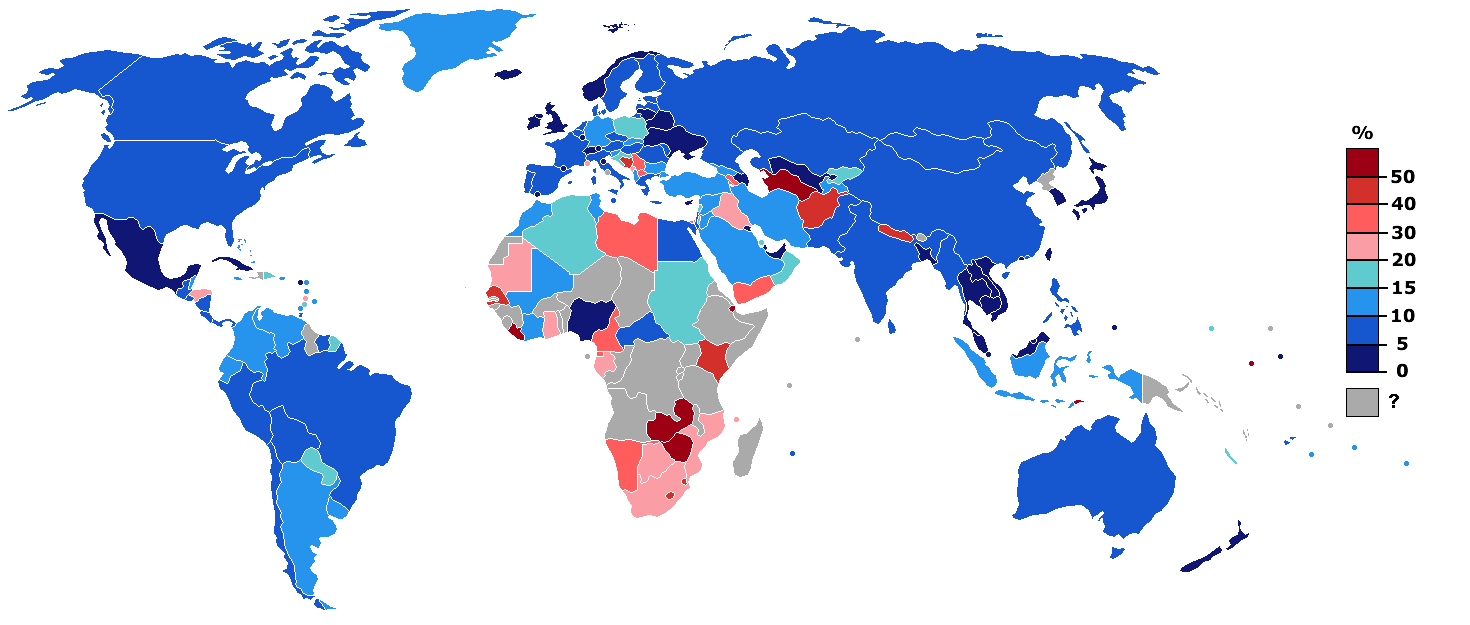
Unemployment rates in Zimbabwe are amongst the highest in the world.
Central Intelligence Agency data (GNU Licence)

There exist sad common factors amongst young Zimbabweans. A lingering feeling of disenfranchisement because our government systems are not properly listening to our problems and the solutions we are offering. Young people are not being given a chance to lead. However, the answer to Zimbabwe's lack of growth, in so many ways, is found in its reluctance to allow youth led innovation.

The older generation feels threatened by young millenials; this is a sad but true indictment. In discussions with my peers, there is a similar frustration, we are not being given a chance to effect change, and this is not referring to Zimbabwe's troubled politics.

None of us sees the world in guarantees, our parents told us to work hard and we would be rewarded with success. Our current state tells otherwise.  We are a generation that's stagnant, unable to grow up. We don't have jobs or own homes. We have young educated job-seekers who rely on their parents for financial support, most of us stay at home because we can't afford to move out and pay rent.

Youth unemployment is a daily reality for millions and Alcoholism is a deadly animal that's consuming thousands of young Zimbabweans. Hopelessness is trait that's become second nature for many. But unlike the generations before us, we have few options. We cannot go to war. We can’t fly abroad. Jumping the border is not a choice. It's tougher out there. Zimbabwe is our option, but a collective effort is required to make it liveable for young people.

What solutions do we offer?  We need economic and social policies that are youth friendly and focused. Just as there exist government measures that protect Pensioners, Civil Servants and War Vets. Let young people come up with these solutions. Employ young people. Lower the retirement age. Enforce paid internships. Introduce learner ships and invest more funding to vocational education. Give funding, resources and support to youth led business ideas. Don't simply give
us money, train young people to be good wealth managers. Zimbabwe has millions of young people with educational qualifications, ideas, energy and patriotism. Take advantage of this.

Who am I speaking to? To you, the older generation. To all of you who were born in Rhodesia. Yes, you endured the hardships of colonial rule, but young people cannot be paying you forever. You took back your country, liberated your people, benefited from land reform and nationalised our country's natural resources. Is that not enough?

Give young people a chance.

A Hopeless Dawn - Frank Bramley 1888
(Creative Commons 2.0 Licence)
Passionate about Law & Media, Chris Dube is a disillusioned young Zimbabwean.
Follow him on Twitter: @ChrisNqoe